Thursday evening in Pendik, the last appointment of the day. A woman in her thirties sat down and never let go of the bag on her lap. She opened her phone and played me a video. On the screen were tiny, pointed little stumps of teeth, with the finished crowns waiting beside them. "Doc, I want a hollywood smile, but after seeing this I haven't slept for two nights. Is this what you are going to do to my teeth?"
At least two people a week show me that video now. To be honest, it is a fair fear. What you see is real, not an edit, and the owner of those teeth will probably wake up one morning and wonder why so little is left. But that is not the only way to get a Hollywood smile, and for most people it is not the right way. Below is what I told her that evening, written the way I would want you to hear it before you ever sit in the chair.
What is a Hollywood smile, and is it a single treatment?
No, it is not. "Hollywood smile" is the name of a goal, not of a procedure. It means evenly lined up teeth, a shade that suits the face and a balanced gum line. Sometimes you get there with whitening alone, sometimes with clear aligners to settle the teeth into place and a few thin porcelain veneers on top. And sometimes crowns really are needed.
We call this smile design, because the work starts with a plan and not with a measurement. Your facial midline, how high your lip lifts when you laugh, how much gum shows, how much of the front teeth you see while talking. All of it is measured one by one. An identical eight-tooth set of veneers can look very natural on one face and like dentures on another.
One more thing. Most people arrive with a number in mind, usually "twenty teeth", because that is what they saw on social media. But how many teeth show when you smile differs from person to person. Some show six. Some show ten. Putting a veneer on a tooth nobody sees only to match a number means taking healthy tooth for nothing.
Are teeth shaved down for a Hollywood smile, and how much?
That was the real question, wasn't it? The amount of tooth shaving depends on the method you choose, and the difference is huge.
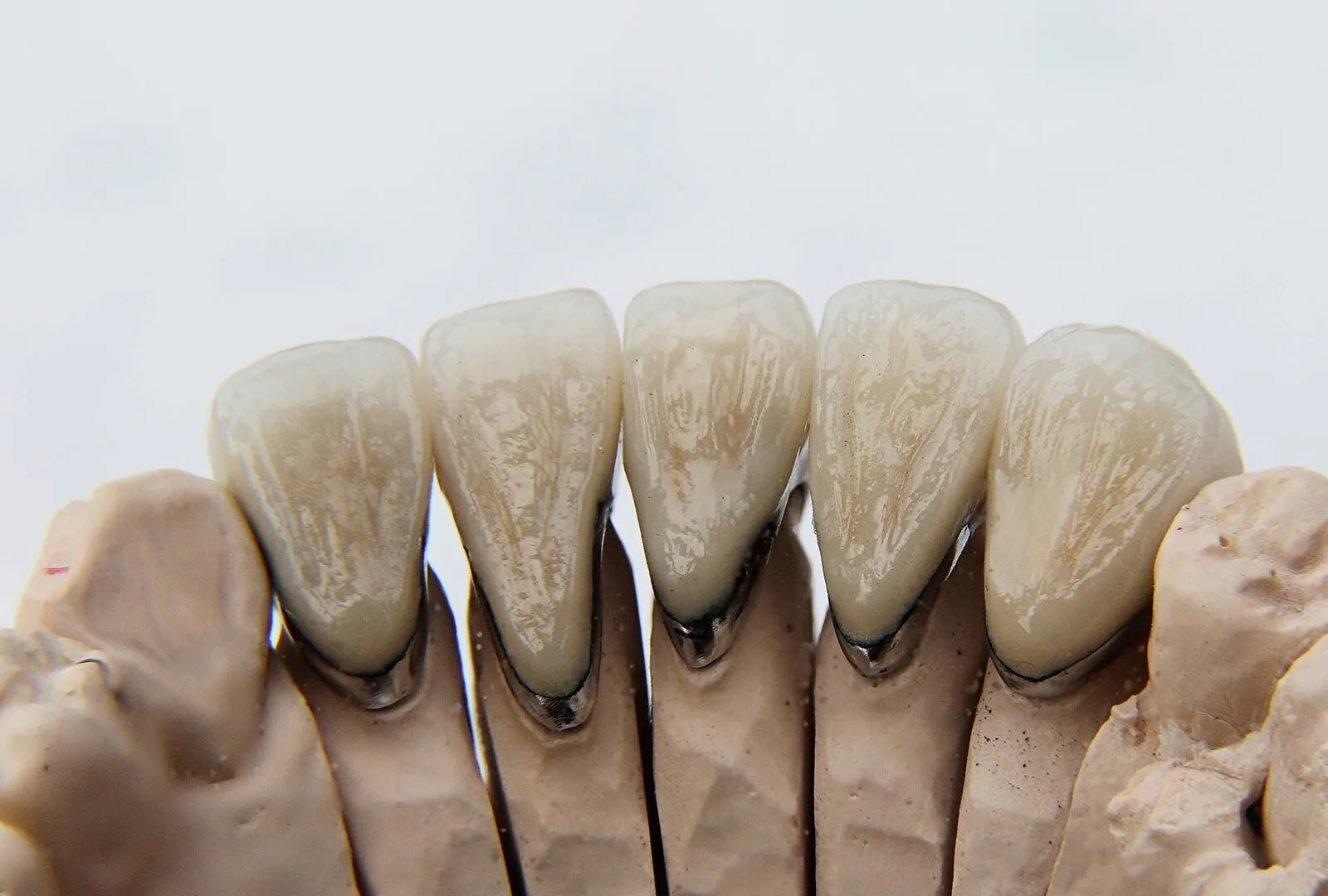
Porcelain veneers, thin shells of ceramic bonded to the front of the tooth, usually need about 0.3-0.7 millimetres of enamel removed from the front surface. Enamel, the outer layer, is roughly one millimetre thick on front teeth. So in a well-planned veneer case the preparation often stays inside the enamel and never gets near the living part of the tooth. In some cases veneers can even be bonded with no shaving at all, which is called no-prep veneers.
Zirconia or all-ceramic crowns are a different story altogether. A crown wraps the tooth on every side like a cap, so 1-2 millimetres of tooth has to be taken from all around. That makes sense on a broken tooth, a heavily filled one, a root-treated one or one that has changed colour badly. On a healthy tooth that is just a little yellow or slightly crooked, it is more than you need.
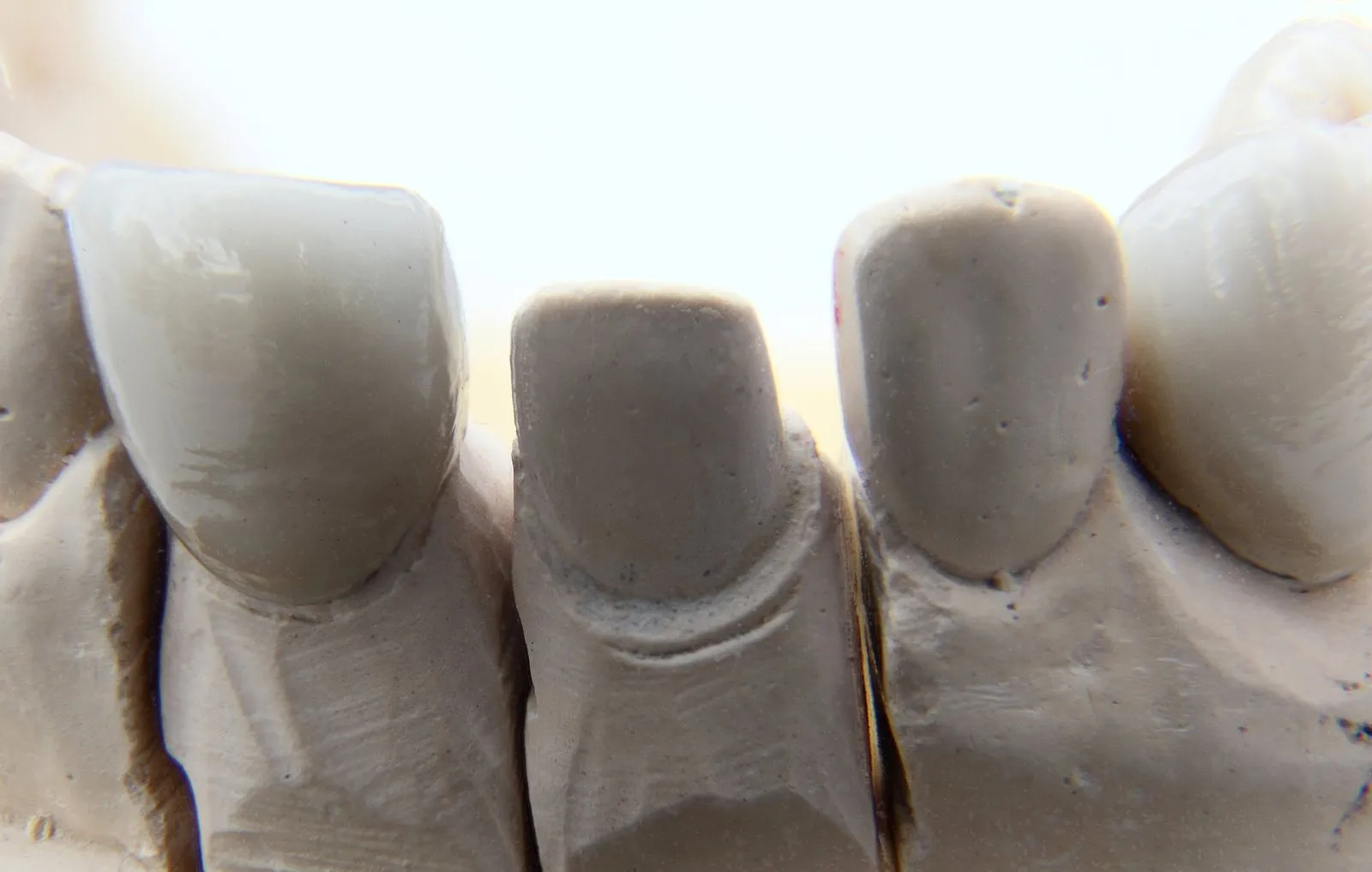
I told her the same thing, plainly. "Your teeth are healthy. They are a bit yellow and two of them sit slightly forward. I don't see anything here that would make us cut them down like the ones in that video."
Enamel that is lost never grows back. So when you decide, the question is not "how white will they be", it is "how much of my tooth will go".
Where do the shark teeth photos and "Turkey teeth" come from?
In the British press the phrase "Turkey teeth" has been going around for a while, and videos of pointed teeth spread on social media under the same label. In most of those images the work is not veneers at all but full crowns placed on healthy teeth. Very often too many of them, squeezed into a short holiday.
So why does it happen? A full crown asks less precision from the lab, and it hides the tooth whatever its colour or position. It is also quick. And that is exactly where the trouble starts. When a tooth is cut down too much, the nerve gets close, and the chance of sensitivity and later root canal treatment goes up. If the edge of a crown does not sit well against the gum, the gum gets inflamed, bleeds and slowly recedes. For this reason the UK health service has a page on what to ask before having cosmetic work abroad.
We have to look at our own profession here too. Many of those photos come from our city, from the chairs of people who wear the same white coat as me, and ignoring that would be unfair to you. Very good dentistry is done in Turkey, and people travel here from all over the world for treatment. But as everywhere else, some people rush the job. You find the difference in the questions you ask.
Veneers or zirconia crowns, which one suits whom?
This is the topic we discuss most. Treat the table below as a rough map. A final decision comes only after your mouth has been examined.
| Porcelain veneers | Zirconia or all-ceramic crowns | Composite bonding | |
|---|---|---|---|
| Tooth removed | 0.3-0.7 mm from the front, sometimes none | 1-2 mm from every side | Often none |
| Who it suits | Healthy, slightly stained, slightly crooked teeth | Broken, heavily filled or root-treated teeth | Small chips, gaps, shape corrections |
| Look | Lets light through close to a natural tooth | Natural when thin, opaque when thick | Shiny at first, can dull and stain with time |
| Visits | Usually 2-3 | Usually 2-3 | Often a single visit |
| Reversibility | Limited, permanent if enamel was removed | None, the tooth always needs a crown | Largely possible |
You can find more detail on veneers on our porcelain veneers page. We also covered when zirconia is really needed and how many years it lasts in our zirconia crown article. And when light transmission matters on the front teeth there is lithium disilicate glass ceramic, a material that can be made very thin and sits very close to a natural tooth.
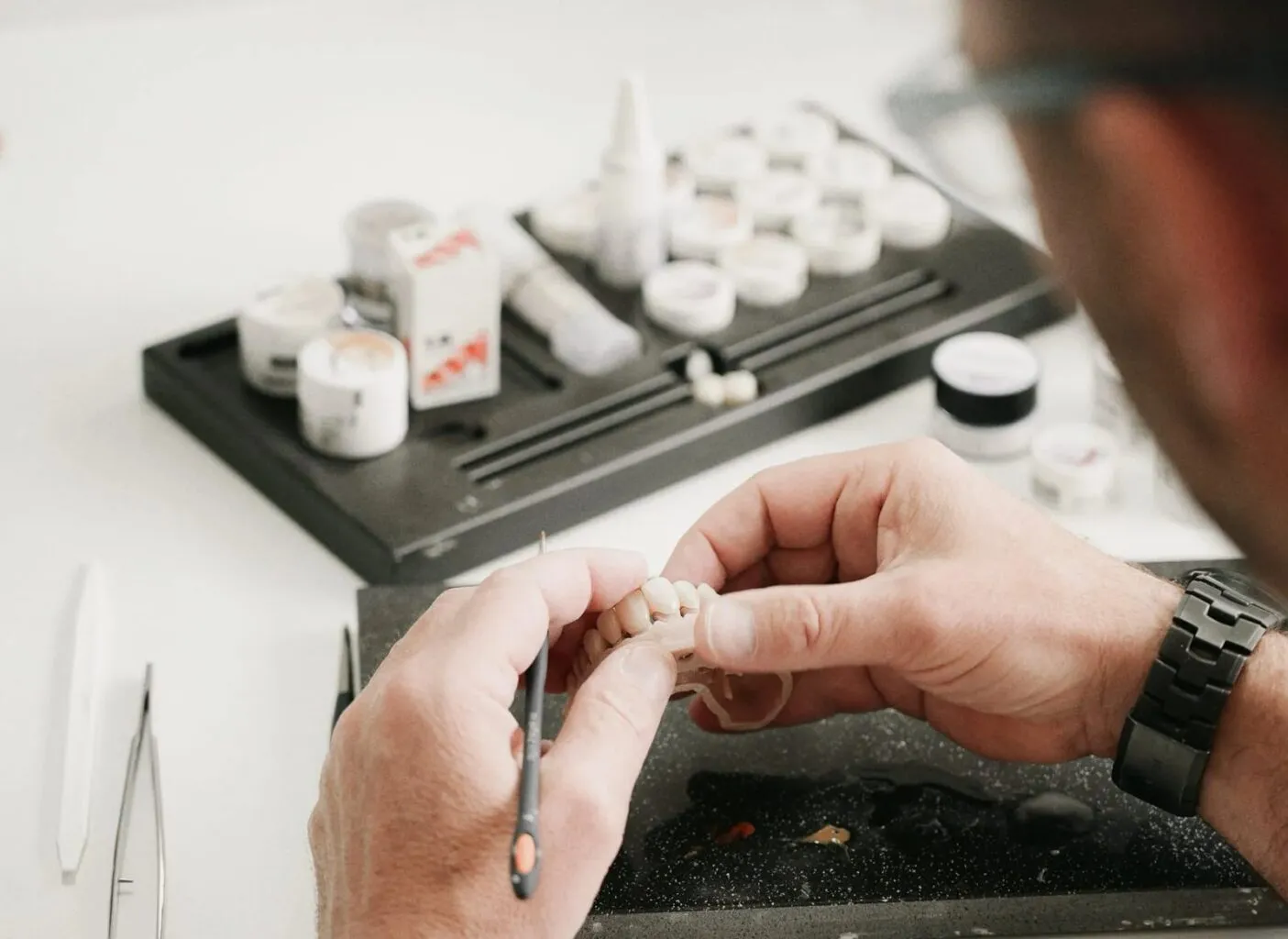
Then there is composite bonding, where the shape is built up layer by layer on the front of the tooth with filling material. It barely touches the tooth, which is a big plus. Its downside is that it does not hold its colour as long as porcelain, and in people who drink a lot of coffee and tea it needs polishing or renewing within a few years. For younger patients it is a good first step that keeps the door open to something else later.
Can you get a smile makeover without touching your teeth?
Often, yes. I have a favour to ask. Before you talk about veneers, ask yourself these questions.
- Are my teeth just yellow, with a shape that is actually fine? Then teeth whitening should be tried first. Seeing how far they lighten sometimes changes the whole plan.
- Are my teeth crooked or gapped? Clear aligners can settle them into place in a few months, and if needed very thin veneers go on afterwards. On straight teeth veneers need almost no shaving.
- Does too much gum show when I smile? Maybe the problem is the gum line and not the tooth. Putting veneers on does not fix that.
- Do I have small chips on the front teeth? Bonding can sort it out in one visit.
We explained how whitening is done and how long it lasts in our teeth whitening article. A quick note, whitening does not change the colour of porcelain or fillings. So if you plan to do both, order matters. Whitening first, and once the shade settles the porcelain is chosen to match.
Why is a trial smile (mock-up) essential in smile design?
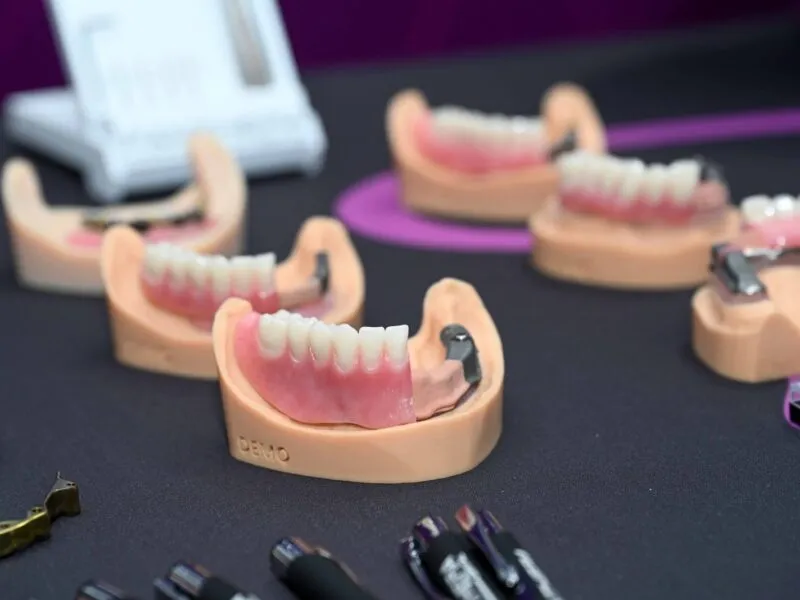
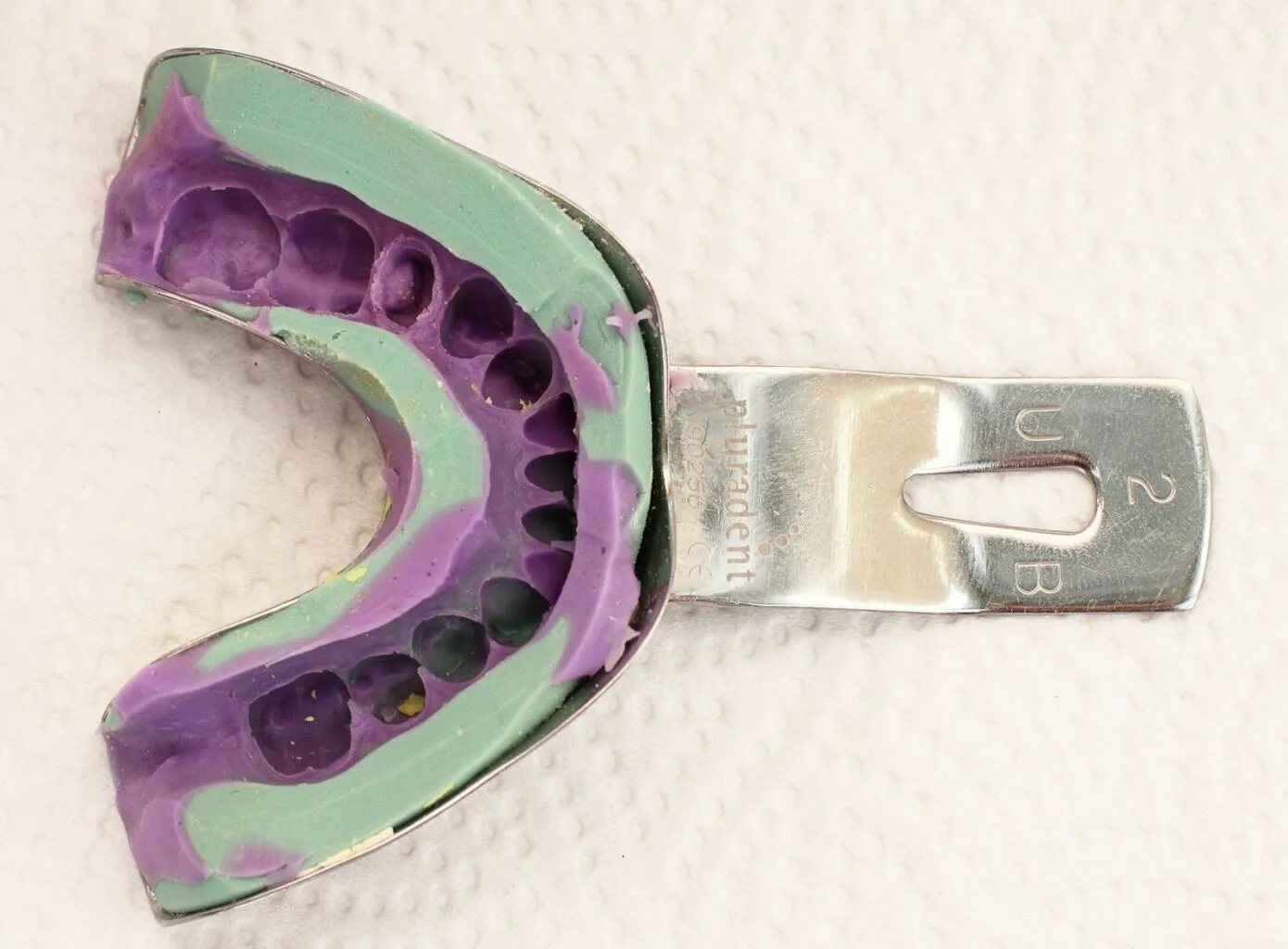
We never start with cutting. Never. First we take a digital scan or an impression of your mouth and photographs of your face. From those the shape of the new teeth is designed on a computer or on a plaster model. Then the design is transferred to your mouth with a temporary material, without touching your own teeth. We call this a mock-up.
Once it is in, you look in the mirror, you talk, you laugh, you take photos. Some people even try biting into a simit, because there is no other way to feel how the new teeth sit in your mouth. That is how you form an opinion. You can go home and show your husband or your mother. Every "a bit too long" or "make that corner rounder" gets changed at this stage.
There is one more benefit to the trial, maybe the most important. A mock-up shows us, millimetre by millimetre, how much tooth has to go. We prepare the teeth by measuring against the trial, so only as much tooth is removed as the new one needs to fit. Shaving teeth without a trial is like setting off without a map, and on a road you cannot come back from.
Questions I would like you to ask at the consultation
How many teeth do you suggest treating and for what reason? Will it be veneers or full crowns and why? Will there be a mock-up trial before any cutting? Roughly how much will be taken from my teeth? What is the generic name of the material? Where and in which lab will the restorations be made? If something goes wrong after I return home, what do we do? If you cannot get clear answers to these, do not hurry.
How is tooth shade chosen, and can it be too white?
Shade. This is where we go wrong most often. On a phone screen the whitest colour looks great, and in daylight it sometimes looks like bathroom tile. When choosing a shade we look at the whites of your eyes and your skin tone. A tooth whiter than the white of your eye looks artificial on most faces.
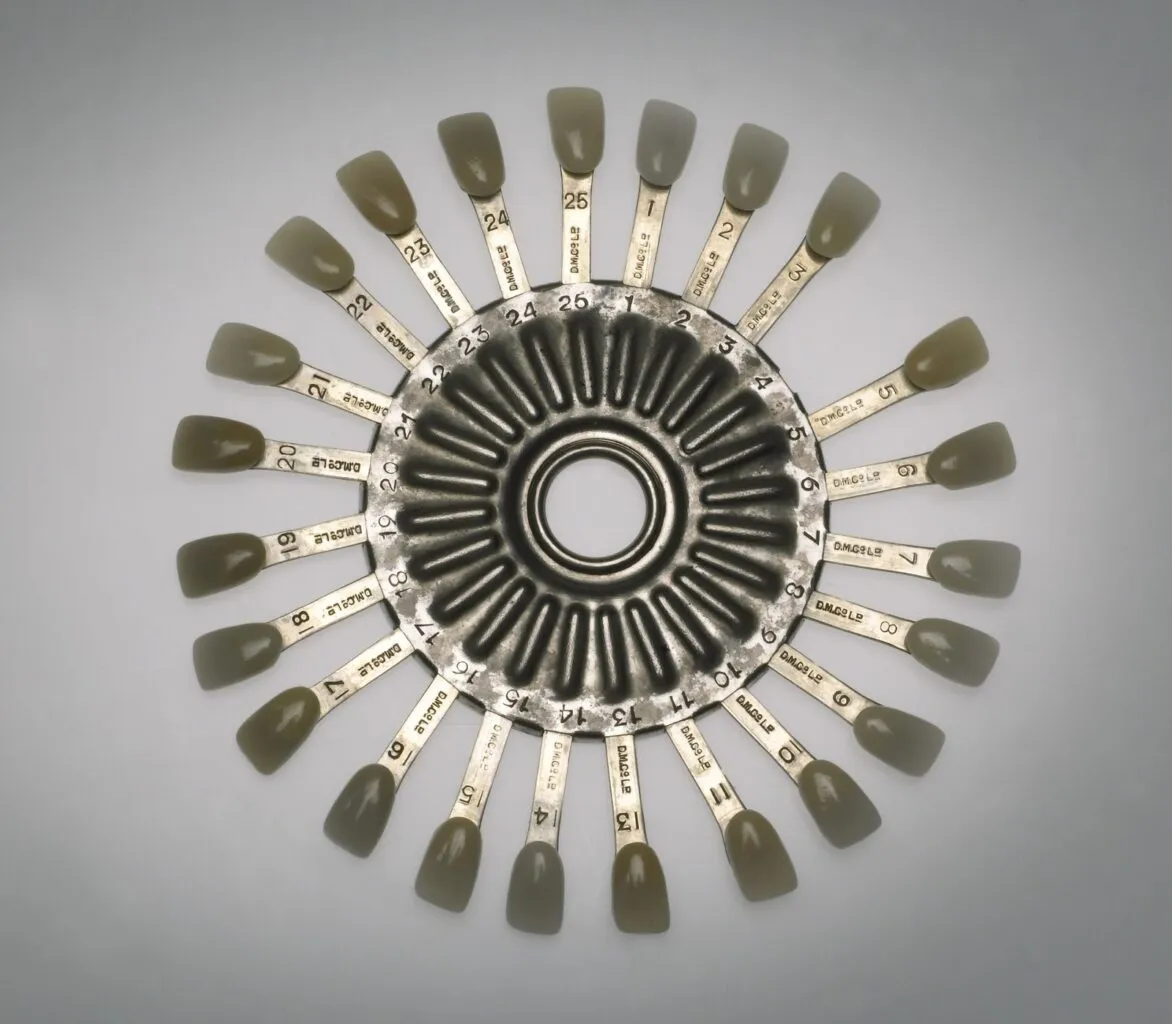
With us the shade is always picked by the window, in daylight. If possible with lipstick wiped off and light makeup. And we often hear this one, "Doc, make it the whitest, it will yellow with time anyway." No, porcelain does not yellow. Your own teeth do, the porcelain stays where it is, and a few years later the difference shows up right across your front teeth for everyone to see. Porcelain does not change colour, it stays the same white even after many years. Your face and your own teeth keep ageing. A face of forty should not get a shade that even a twenty-year-old would find too much.
And it is not only about colour. A real tooth is slightly translucent at the tip, more opaque in the middle and a little darker towards the neck. A good lab builds these gradients into the porcelain. Eight teeth in one flat colour and one level of shine will draw attention however even they are.
How many days does a Hollywood smile take?
A hollywood smile with veneers or crowns is usually finished in two or three visits. On the first day there is the exam, photographs, scan and design. Once you are happy with the trial, the teeth are prepared and temporary ones are fitted. Over the next few days the lab makes the porcelain, and at the last visit each piece is tried and bonded one by one.
For patients who travel from another city or another country this often fits into a week, but we say so after examining the mouth, not as a promise up front. If a gum infection, a cavity or a tooth that needs root canal treatment turns up, those come first. When planning, we ask you to keep your return flight flexible by a few days.

Our Haliç clinic is close to the centre and our Pendik clinic is close to Sabiha Gökçen Airport. We choose together which one is easier for you depending on where you are staying. If you are thinking of coming to Turkey for treatment you can read the process step by step in our dental tourism guide.
Who should not have a Hollywood smile, or should wait?
Sometimes the right answer is "not now". It is a hard answer to give, especially when the person in front of you has come three weeks before a wedding.
No porcelain goes on before gum disease is treated. There is no negotiation on this. On bleeding, swollen gum the margin cannot be fitted properly, and the infection simply carries on under the porcelain. Someone whose gums bleed first needs cleaning and gum treatment. You can read about the causes in our bleeding gums article.
People who clench or grind at night can break porcelain or knock it loose. That does not rule out treatment, but a night guard is a must. People who use their front teeth a lot for chewing, who bite pens or crack sunflower seeds belong to this group too. We once asked a patient who played goalkeeper in a Sunday league to get a mouthguard, and we were proved right.
Age matters as well. We do not recommend veneers or crowns under eighteen, before the teeth and gums have finished developing. During pregnancy we leave cosmetic work until after the birth.
How long do porcelain veneers last, and what can go wrong?
There are many scientific studies showing that well-made and well-cared-for veneers serve for many years. The American Dental Association also reminds patients plainly that veneers are a permanent procedure and may need replacing one day. But giving you a number of years would not be honest. What decides the lifespan is less the material and more your habits.
Now let's talk about what can go wrong.
- In the first days there can be sensitivity to cold, which usually settles within a few weeks.
- Porcelain can crack if it meets something hard, or a small piece can chip off at the edge.
- Slight staining can appear along the margins over time, and regular check-ups and polishing usually bring it back.
- If the gum recedes, the edge of the restoration can become visible. We wrote about the causes in our gum recession article.
- Decay can still develop in the tooth underneath, because porcelain does not protect a tooth from cavities.
Aftercare? Boringly simple. Brush twice a day, clean between the teeth, and have a check-up every six months. Britain's NHS explains the right way to brush briefly and clearly here. And the World Health Organization stresses that most oral diseases can be prevented. That is even truer for teeth with porcelain on them.
Why can't the cost of a Hollywood smile be given as one figure?
This is the question we get most on the phone. There is no figure here, for two reasons. First, the regulation on the promotion of healthcare services does not allow us to share prices. Second, we honestly do not know. Any figure given without looking into your mouth is most likely wrong.
What changes the cost is well known. How many teeth need work and whether it will be veneers, full crowns or bonding both matter. So does whether whitening, gum treatment or clear aligners are needed beforehand. The type of material and the craftsmanship of the lab that makes the porcelain change the calculation from top to bottom. If you hear a flat figure over the phone, such as "twenty teeth for this much", you are probably being described a standard package and not a plan that fits your mouth.
What should you check before getting a Hollywood smile?
Start with photos. From the front, from the side, smiling and talking. Then sit down and write on a piece of paper everything that bothers you about your smile, however small, because half of it gets forgotten in the consultation from nerves. "My teeth are yellow" and "my front tooth is chipped" lead to different treatments.
Do not hesitate to see more than one dentist, nobody will be offended. If the number of teeth and the method suggested differ a lot, ask why. Listen to the dentist who talks about the route that takes the least tooth, not the shortest route. If a plan is made without an X-ray and without a look at your gums, stop for a minute right there.
One last warning. Porcelain does not copy your own teeth. It makes new teeth that fit your mouth and your face. Aim for the smile that suits you in the mirror, not the one in the filtered photo.
Frequently asked questions
Do teeth have to be shaved down for a Hollywood smile?
No. If the teeth are healthy and straight, a lot can be done with whitening, bonding or no-prep veneers. With porcelain veneers about 0.3-0.7 millimetres of enamel is usually taken from the front of the tooth, while with full crowns that goes up to 1-2 millimetres on every side.
What do my teeth look like if the veneers are removed?
If enamel was removed for the veneers, the teeth do not go back to how they were and they will need a restoration again. That is why veneers should be seen as a permanent decision. With no-prep veneers the tooth itself is largely preserved.
Why do "Turkey teeth" look like pointed pegs?
These images usually appear when healthy teeth are given full crowns instead of veneers. A full crown needs the tooth to be thinned from every side. In a properly planned smile makeover this much tissue does not have to be taken from healthy teeth.
How many days does a Hollywood smile take?
Work with veneers or crowns is usually done in two or three visits, often within a week. If gum treatment, a cavity or root canal treatment is needed first, it can take longer. An exact time can only be given after the examination.
Are veneers or zirconia crowns better?
Which one is better depends on the condition of the tooth. On healthy, slightly stained or slightly crooked teeth veneers take less tooth. On broken, heavily filled or root-treated teeth a full crown may be more suitable.
Do porcelain teeth turn yellow?
Porcelain itself does not change colour. Slight staining can appear at the margins over time, and regular check-ups and polishing usually put that right. Your own teeth can keep yellowing, so the shade should be chosen with that in mind.
Can I eat anything after a Hollywood smile?
You can eat almost all everyday food. Cracking nuts or seeds, chewing ice, opening packets with your teeth or biting pens can break porcelain. If you clench at night, you should use a night guard.
What is a mock-up in smile design?
A mock-up is the transfer of the designed new teeth to your mouth with a temporary material, without touching your own teeth. It lets you see your new smile in the mirror, while talking and in photos. It also shows the dentist, to the millimetre, how much tooth needs to be taken.
From what age can you have a Hollywood smile?
Veneers or crowns are generally not recommended before eighteen, until the teeth and gums have finished developing. For young people, reversible methods such as whitening, orthodontics or bonding make a better starting point.
That Thursday evening we did not touch a single tooth. Our patient stood in front of the mirror in the corridor for a while with the mock-up in, turning from side to side, and then took out her phone. "Wait, let me send my mum a photo first." We made the decision about cutting not that week but the next one, after the whitening. It was the right call.
Send us a few photos of you smiling and your X-ray if you have one, and we will go through how much tooth would really need to be taken with our dentist. Contact page