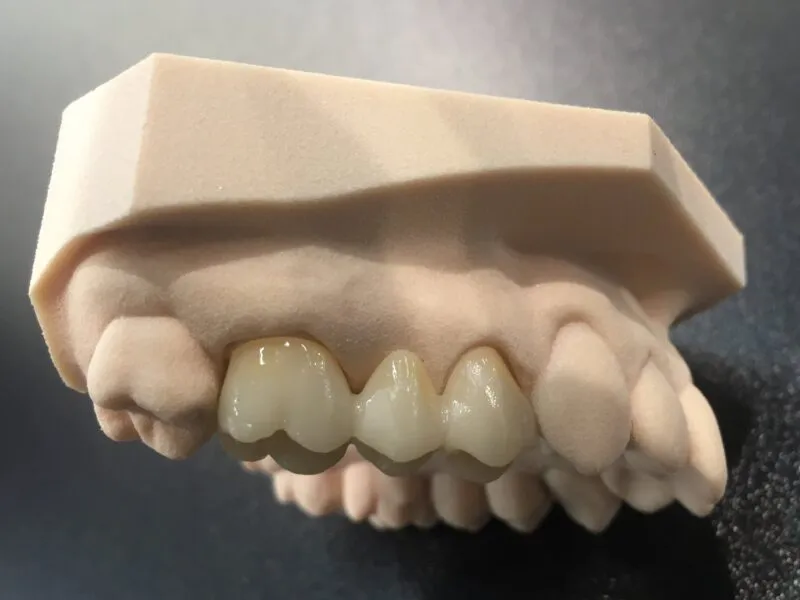
Zirconia crowns are a type of crown (dental cap) made from zirconium oxide ceramic, with no metal framework. Because they are very strong, they can be used on back teeth, in bridges and, in suitable cases, on front teeth. Which type of zirconia suits which tooth is decided after a clinical examination and an X-ray assessment.
What is a zirconia crown?
A zirconia crown is a crown that covers the whole of a tooth that has been reduced in size, made by computer-aided milling from a block of zirconium oxide. Because it contains no metal, there is no dark line at the gum edge, and it lets light through more naturally than porcelain fused to metal. Two basic designs are used in the clinic:
- Monolithic zirconia: Made in one piece of zirconia. It is often chosen for back teeth, where chewing forces are high, and for people who clench or grind their teeth.
- Layered zirconia: Porcelain is added on top of a zirconia framework. It is used on front teeth to give finer colour transitions, but the porcelain layer on top has a slightly higher risk of chipping than the monolithic design.
Who can have zirconia crowns?
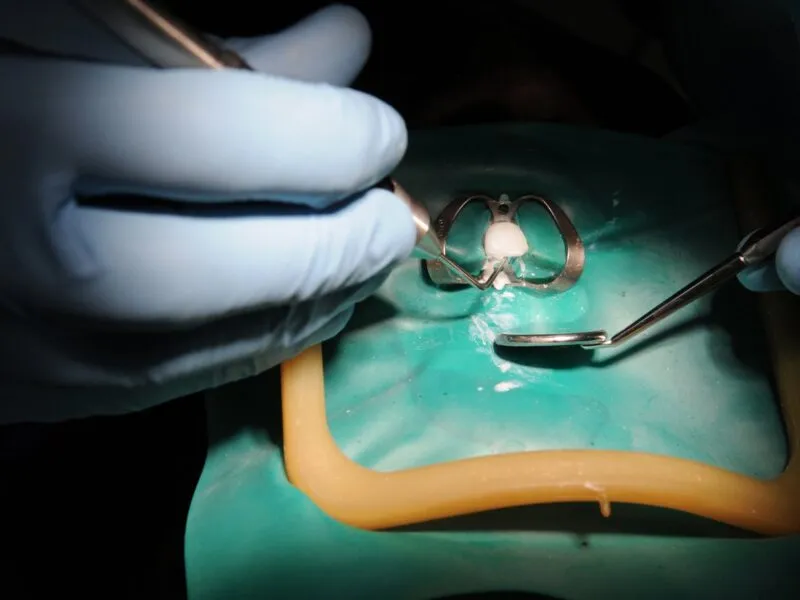
Zirconia crowns are usually placed on teeth with large fillings, fractured teeth, teeth that have had root canal treatment, or teeth with shape and colour problems that cannot be corrected with a filling. Common situations include:
- Teeth weakened after root canal treatment that are at risk of breaking
- Teeth with large fillings, cracks or a lot of lost tooth structure
- Missing-tooth areas that need a bridge, and crowns on implants
- Old metal-based crowns that have discoloured the gum edge, or metal sensitivity
If there is untreated gum disease, active decay or clenching that is not under control, these are dealt with first. If you only want to change the colour or make a small change in shape on sound teeth, options that need less filing, such as porcelain laminate veneers or whitening, are discussed first.
How much of the tooth is removed for a zirconia crown?
For a zirconia crown, the tooth is usually reduced by about 1-2 mm around its sides and on the biting surface; the exact amount depends on the position of the tooth and the design chosen. A monolithic design can be made thinner in some areas, so it may need less reduction than a layered design. The enamel and dentine that are removed do not grow back, so the procedure should be thought of as an irreversible treatment. In living teeth the reduction is done under local anaesthesia. In teeth where decay is close to the nerve, root canal treatment may be needed later after the reduction; this possibility is assessed beforehand with an X-ray.
How many visits does a zirconia crown take?
A zirconia crown is completed in 2-3 sessions in most cases, and laboratory production usually takes a few working days. The typical flow is as follows:
- Examination and planning: An X-ray is taken, and the gum and bite are checked. If needed, a filling, root canal or gum treatment is done first.
- Preparation and impression: The teeth are shaped, a digital impression is taken with an intraoral scanner, and the shade is chosen in conditions close to daylight. A temporary crown is fitted while the laboratory works.
- Try-in: Where needed, the crown is tried in the mouth; the fit of the edge, the bite and the colour are checked.
- Cementing: The crowns are cemented onto the tooth and the bite is adjusted.
The time is longer when many teeth are crowned at once or when other treatments are needed first. The exact session plan is set after the examination.
Do I need to travel more than once for zirconia crowns?
For most international patients, zirconia crowns can be completed in one stay of about 1-2 weeks, in 2-4 sessions with laboratory time in between. If root canal treatment, gum treatment or implants are needed first, a second visit may be advised. Photos and an existing panoramic X-ray or CT scan can be sent by WhatsApp for a preliminary assessment before you travel, but the final plan is only made after the in-person examination. Check-ups after you return home can be done with a local dentist, with remote contact with our clinic in between.
Zirconia, glass ceramic or laminate: which should I choose?
The basic difference between these three options is how much of the tooth they cover and the balance between strength and translucency.
| Feature | Zirconia crown | Glass ceramic crown | Porcelain laminate |
|---|---|---|---|
| Area covered | The whole tooth | The whole tooth | Usually the front surface and biting edge |
| Tooth reduction | Moderate, sometimes more | Moderate | Little |
| Translucency | Medium, higher in layered | High | High |
| Resistance to fracture | High | Medium to high | Depends on bonding and tooth structure |
| Where often used | Back teeth, bridges, on implants | Front teeth and premolars | Front teeth with sound structure |
Details on lithium disilicate are on the glass ceramic crowns page.
How long do zirconia crowns last, and what does it depend on?
How long a zirconia crown lasts varies from person to person; well looked-after crowns that are checked regularly can be used for many years, but it would not be right to give a fixed figure for everyone. The factors that affect it most are:
- Whether the tooth under the crown is protected from decay at the margins
- Gum health and the build-up of tartar
- Clenching or grinding, and the habit of biting on hard objects
- The condition of the root in teeth that have had root canal treatment
- How well the crown margin fits the tooth and how accurately the bite is adjusted
Our article that covers this in more detail: How many years do zirconia crowns last?
What are the risks and disadvantages of zirconia crowns?
The main disadvantage of a zirconia crown is that it requires an irreversible amount of tooth tissue to be removed. Other points to know:
- Sensitivity: You may have sensitivity to hot and cold in the first days; it usually eases within a few weeks, and if it does not, a check-up is needed.
- Nerve problems: In teeth with deep decay or a history of large fillings, root canal treatment may be needed later on.
- Chipping of the porcelain layer: In layered zirconia, the porcelain on top can chip in places.
- Wear on the opposing tooth: Zirconia that has not been polished well, or that is left rough after adjustment, can wear the tooth opposite.
- Colour matching: With a single front tooth, it can be hard to match the neighbouring natural teeth exactly. Zirconia does not lighten with whitening; if you are considering whitening, it is done before the crown.
- Gum recession: If the gum recedes over the years, the edge of the crown can become visible.
How do I look after zirconia crowns?
Looking after a zirconia crown is the same as looking after natural teeth: brushing twice a day with fluoride toothpaste and cleaning the edges of the crowns with floss or interdental brushes. For cleaning under bridges, floss with special tips or a water flosser may be suggested. Not eating until the anaesthetic has worn off prevents you from biting your lip and cheek. If the bite feels high after cementing, come for a check-up without waiting. If you clench your teeth, a night guard protects the crowns and your natural teeth. Check-ups and scale and polish twice a year help to spot decay at the margins early.
Where can I be examined in Istanbul?
Planning zirconia crowns starts with an examination and an X-ray assessment at our Haliç (Hasköy, Beyoğlu) and Pendik clinics. At the examination, we discuss which teeth really need crowns, which can be treated with less invasive options, and the session plan. For clinic details, see the Haliç clinic page.
Sources
- American Dental Association: Materials for Indirect Restorations
- ADA MouthHealthy: Crowns
- NHS: Teeth grinding (bruxism)
The results of any surgical or interventional procedure may vary from person to person. It is recommended that you obtain detailed advice from your physician before the procedure. The information on this page is for general informational purposes; the treatment suitable for you is determined after an examination.