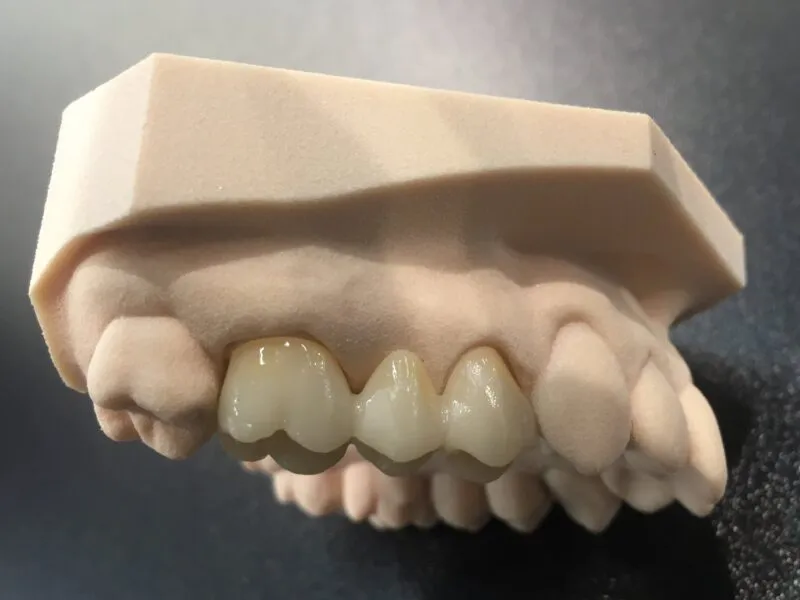
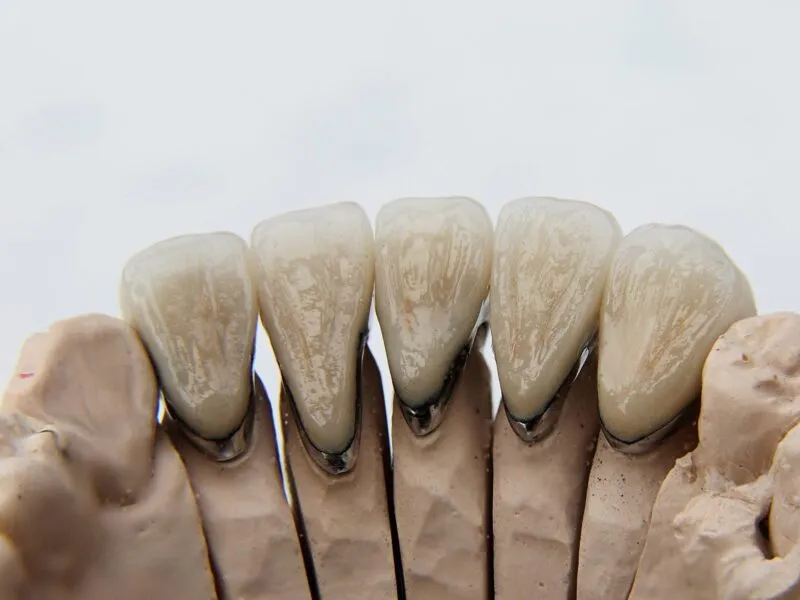
Glass ceramic crowns are metal-free crowns made from a strengthened glass ceramic called lithium disilicate. Their translucency is close to that of a natural tooth, so they are preferred especially on front teeth and premolars. Suitability is decided after an examination by assessing the structure of the tooth, your bite and the chewing forces involved.
What is a lithium disilicate (glass ceramic) crown?
A lithium disilicate crown is a ceramic restoration with lithium disilicate crystals inside a glass matrix, made in one piece by milling or by the press technique. The glass component lets light pass through the tooth, while the crystals give the material strength. These crowns are mostly bonded to the tooth with an adhesive technique, which creates a micromechanical and chemical bond between crown and tooth. The same material can be used for partial restorations such as onlays, endocrowns and laminates as well as full crowns.
What is the difference between a glass ceramic crown and a zirconia crown?
The basic difference is that lithium disilicate has higher translucency, while zirconia has higher resistance to fracture. Which one is chosen depends on where the tooth is in the mouth and on your bite.
| Feature | Lithium disilicate | Zirconia | Porcelain fused to metal |
|---|---|---|---|
| Translucency | High | Medium | Low |
| Resistance to fracture | Medium to high | High | High |
| How it is bonded | Mostly adhesive | Adhesive or conventional cement | Conventional cement |
| Look at the gum edge | No metal line | No metal line | A dark line can appear over time |
| Where often used | Front teeth and premolars | Back teeth, bridges | Back teeth, long bridges |
For the properties of zirconia and how the treatment works, see the zirconia crowns page.
Who can have glass ceramic crowns?
Glass ceramic crowns are usually used on front teeth and premolars where appearance matters a lot, and on teeth that have lost too much structure to be repaired with a filling. Common situations are:
- Front teeth that are fractured, have large fillings or have lost their shape
- Teeth with discolouration that whitening or laminates cannot correct
- Front teeth and premolars that have had root canal treatment and need strengthening
- Old metal-based crowns that are being replaced for cosmetic reasons
Lithium disilicate may not be the first choice where there is marked clenching or grinding, very short tooth crowns, deep margins that extend below the gum, or where a long bridge is needed. On molars, where chewing force is high, zirconia often comes to the front. In teeth that have darkened markedly after root canal treatment, a more opaque ceramic may be chosen, because the translucency of glass ceramic can let the colour underneath show through.
How much of the tooth is removed for a glass ceramic crown?
For a lithium disilicate crown, the tooth is usually reduced by about 1-1.5 mm around its sides and by 1.5-2 mm on the biting surface or cutting edge. The exact amount varies with the position of the tooth, the design of the crown and the minimum thickness the material needs. If most of the tooth is sound, partial restorations such as onlays or laminates, which need less reduction, are considered first. Tooth structure that is removed does not grow back; the treatment is irreversible.
How many visits does a glass ceramic crown take?
A glass ceramic crown is completed in 2-3 sessions in most cases, and laboratory production usually takes a few working days.
- Examination: An X-ray, gum and bite assessment is done; if needed, root canal, filling or gum treatment is completed first.
- Preparation and impression: The tooth is shaped and a digital impression is taken. Because glass ceramic lets light through, the colour of the prepared tooth itself is also photographed and sent to the laboratory. A temporary crown is fitted.
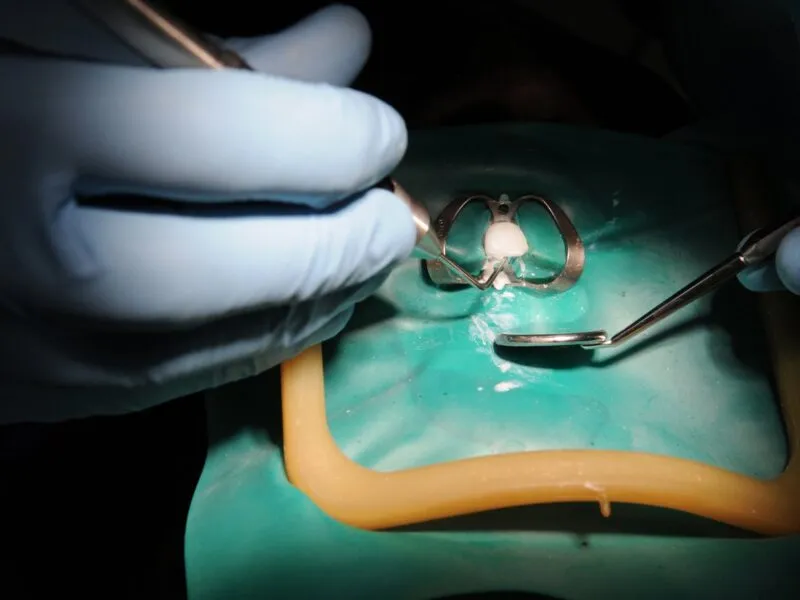
- Try-in and cementing: The fit and colour of the crown are checked in the mouth. The tooth is isolated from saliva, the crown is bonded with the adhesive technique and the bite is adjusted.
The time is longer when several teeth are crowned or pre-treatment is needed; the exact plan is set after the examination.
Do I need to travel more than once for glass ceramic crowns?
For most international patients, glass ceramic crowns can be completed in one stay of about 1-2 weeks, in 2-4 sessions with laboratory time in between. If root canal treatment, gum treatment or other work is needed first, a second visit may be advised. Photos and an existing panoramic X-ray or CT scan can be sent by WhatsApp for a preliminary assessment before you travel, but the final plan is only made after the in-person examination. Check-ups after you return home can be done with a local dentist, with remote contact with our clinic in between.
How long do glass ceramic crowns last, and what does it depend on?
How long a glass ceramic crown lasts varies from person to person; crowns made for a suitable tooth and looked after well can be used for many years, but it is not possible to state a fixed figure. The main factors are whether decay develops at the crown margin, the quality of the adhesive bond, clenching habits, whether the bite is adjusted correctly and oral hygiene. In people who clench, wearing a night guard lowers the risk of fracture.
What are the risks and disadvantages of glass ceramic crowns?
The main disadvantage of a glass ceramic crown is that its resistance to fracture is lower than that of zirconia. Other important points:
- Tooth reduction: For a full crown, tissue is removed from every surface of the tooth and this cannot be reversed.
- Sensitivity: You may have sensitivity to hot and cold in the first days; it usually eases within a few weeks.
- Fracture: Clenching, biting on hard objects or too little thickness of material can lead to a crack or fracture. A broken glass ceramic crown generally cannot be repaired and a new one is made.
- Colour matching: The dark colour of the tooth underneath can affect the shade of the crown. With a single front tooth, an exact match with the neighbours is not always easy.
- Technique-sensitive bonding: Adhesive bonding needs a dry working field, which can be harder with margins that extend below the gum.
How do I look after glass ceramic crowns?
A glass ceramic crown should be brushed twice a day with fluoride toothpaste like a natural tooth, and its edges cleaned with floss or interdental brushes. Not biting hard objects such as pens, nails and seeds with the front teeth reduces the risk of fracture. If the bite feels high after cementing, come for a check-up to have it adjusted. Check-ups and scale and polish twice a year help to spot decay at the margins early.
Where can I be examined in Istanbul?
Planning a glass ceramic crown starts with an examination, an X-ray and a bite assessment at our Haliç (Hasköy, Beyoğlu) and Pendik clinics. At the examination, we discuss whether a full crown is right for your tooth, or whether an option that needs less reduction, such as a porcelain laminate veneer, would be more suitable. For clinic details, see the Pendik clinic page.
Sources
- American Dental Association: Materials for Indirect Restorations
- ADA MouthHealthy: Crowns
- NHS: Teeth grinding (bruxism)
The results of any surgical or interventional procedure may vary from person to person. It is recommended that you obtain detailed advice from your physician before the procedure. The information on this page is for general informational purposes; the treatment suitable for you is determined after an examination.