Wisdom tooth removal is the surgical removal of the third molars at the very back of the mouth, which often cannot come through fully. Removing an impacted wisdom tooth usually takes 30-60 minutes and is done under local anaesthesia. The position of the tooth, its roots and how close it is to the nerve are assessed with an examination and a CT scan; other oral and maxillofacial surgery procedures, such as cysts, apicoectomy and jaw joint problems, are also planned in this department.
What is an impacted wisdom tooth?
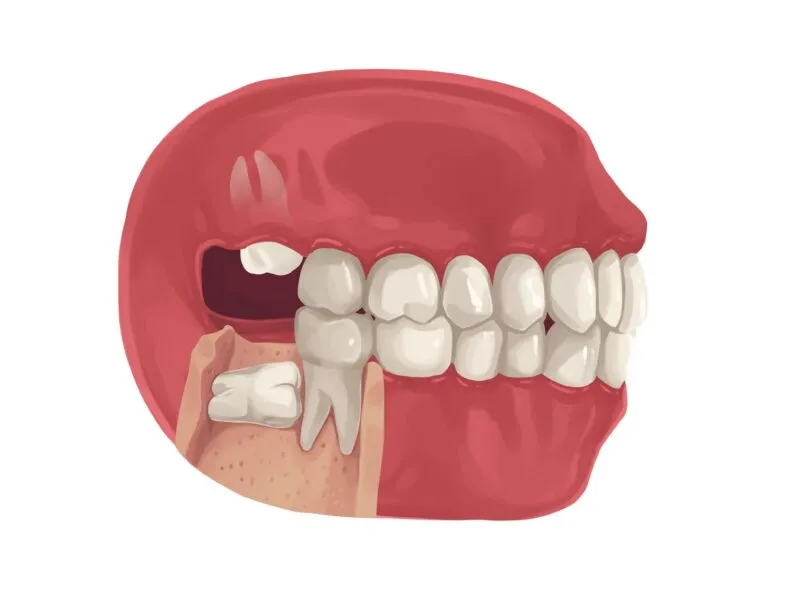
An impacted wisdom tooth is a third molar that stays partly or completely under the bone or gum because there is not enough room in the jaw. Wisdom teeth usually try to come through between the ages of 17 and 25. They can be upright, horizontal, or tilted forwards or backwards. Under the flap of gum over a partly erupted tooth, food debris and bacteria collect, leading to repeated infection and swelling. A tooth that stays completely in the bone may cause no symptoms for years and only be noticed on an X-ray.
Do all wisdom teeth need to be removed?
No, wisdom teeth that cause no trouble, have come through properly and can be kept clean do not have to be removed. Removal is usually recommended in these situations:
- Repeated gum infection around the tooth (pericoronitis), pain and swelling
- Decay in the wisdom tooth or in the second molar in front of it
- Bone loss at the root of the neighbouring tooth, or a gum pocket forming there
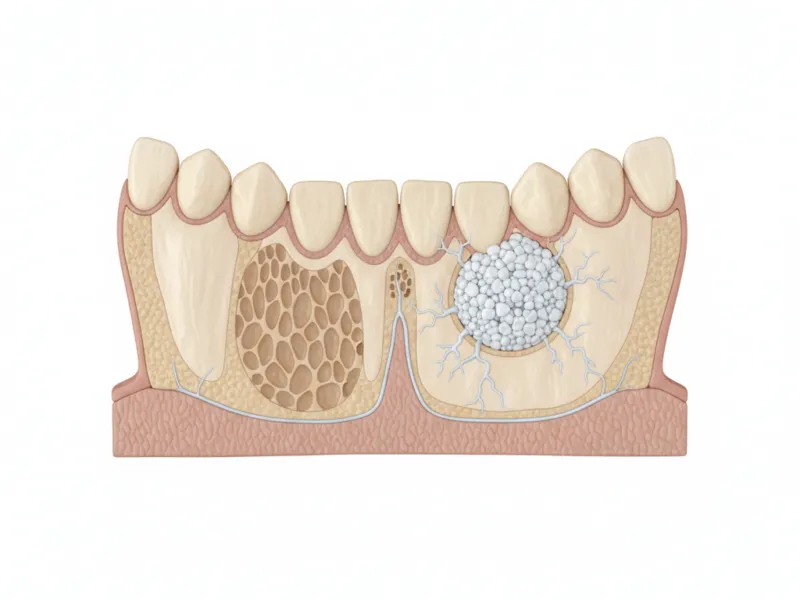
- A cyst developing around the tooth
- When an orthodontic or prosthetic treatment plan requires it
For impacted teeth that give no symptoms, the decision is made case by case; in some patients, monitoring with regular X-rays can be enough.
How is a wisdom tooth removed?
1. Examination and imaging
A panoramic X-ray is taken first. If the roots appear close to the nerve canal in the lower jaw, or reach into the sinus in the upper jaw, a CT scan is requested. This image lets the dentist plan in which direction the tooth will be taken out and in how many pieces.
2. Anaesthesia
The procedure is done under local anaesthesia, which aims to prevent pain during the procedure; you may feel pressure and vibration. In anxious patients, or when several impacted teeth are to be removed in the same session, sedation can be planned in suitable cases.
3. The extraction
A fully erupted tooth can be removed in the conventional way. With an impacted tooth, the gum is opened, some of the bone around the tooth is removed if necessary, and the tooth is divided into pieces and taken out. This method aims to reduce the force placed on the surrounding tissue.
4. Stitches and follow-up
The area is cleaned and stitched. Dissolving stitches fall out by themselves; non-dissolving stitches are usually removed after 7-10 days.
How long does it take, and what is recovery like?
Removing an impacted wisdom tooth often takes 30-60 minutes; for an erupted tooth it is shorter. Swelling is usually at its worst on the second or third day and then goes down. Limited mouth opening and tenderness can last a few days. Most people go back to their daily routine within two or three days; soft tissue healing takes a few weeks and bone healing a few months. We describe the period after the extraction day by day in our article on what to expect after wisdom tooth removal.
What should I do after wisdom tooth removal?
- Bite on the gauze pad for 30-45 minutes. For the first 24 hours, avoid spitting, rinsing and using a straw, which can dislodge the clot in the socket.
- On the first day, apply a cold pack to the outside of the cheek in short intervals.
- For a few days, eat lukewarm, soft foods and avoid hot drinks.
- Do not smoke for at least a few days; it can lead to loss of the clot and a dry socket.
- Start brushing the next day, taking care around the extraction site. If your dentist advises it, rinse gently with warm salt water.
- Take the prescribed medicines as directed.
What are the risks and possible complications of wisdom tooth removal?
Wisdom tooth removal is a surgical procedure; swelling, bruising and temporary limits on mouth opening are expected. Less common problems include:
- Dry socket (alveolar osteitis): If the clot is lost, increasing pain that radiates to the ear and a bad smell appear 2-4 days after the extraction. At the clinic, the socket is cleaned and dressed. Smoking increases this risk.
- Infection: It shows itself as increasing swelling, fever and a discharge of pus.
- Nerve involvement: If the roots of a lower wisdom tooth are very close to the nerve canal, numbness of the lip, chin or tongue can develop. It is often temporary and rarely lasts a long time. A CT scan is requested so that this risk can be assessed in advance.
- Connection with the sinus: If the roots of an upper wisdom tooth reach the sinus, a small opening can form during the extraction; it is usually closed in the same session.
People who take blood thinners, people with diabetes and people who take bone medicines should share their medicine list before the extraction.
What other oral and maxillofacial surgery procedures are there?
Oral and maxillofacial surgery is not limited to wisdom teeth. The following procedures are also planned in this department:
- Cyst surgery: Removing cysts in the jawbone that are found by chance on an X-ray or that show themselves as swelling.
- Apicoectomy: Root canal treatment sometimes fails to clear infection at the root tip; an apicoectomy cleans out the root tip and the infected tissue around it.
- Jaw joint (TMJ) problems: For clicking, pain and locking when opening the mouth, examination, assessment of clenching habits, a night guard and, when needed, planning of further treatment.
- Surgery before implants: Removing impacted teeth, cysts or root remnants, and bone graft and sinus lift procedures.
Where can I be examined in Istanbul?
The decision to extract and the method are based on the examination and the X-ray or CT findings. You can come to our Haliç clinic or our Pendik clinic for an examination.
Sources
The results of any surgical or interventional procedure may vary from person to person. It is recommended that you obtain detailed advice from your physician before the procedure. The information on this page is for general informational purposes; the treatment suitable for you is determined after an examination.