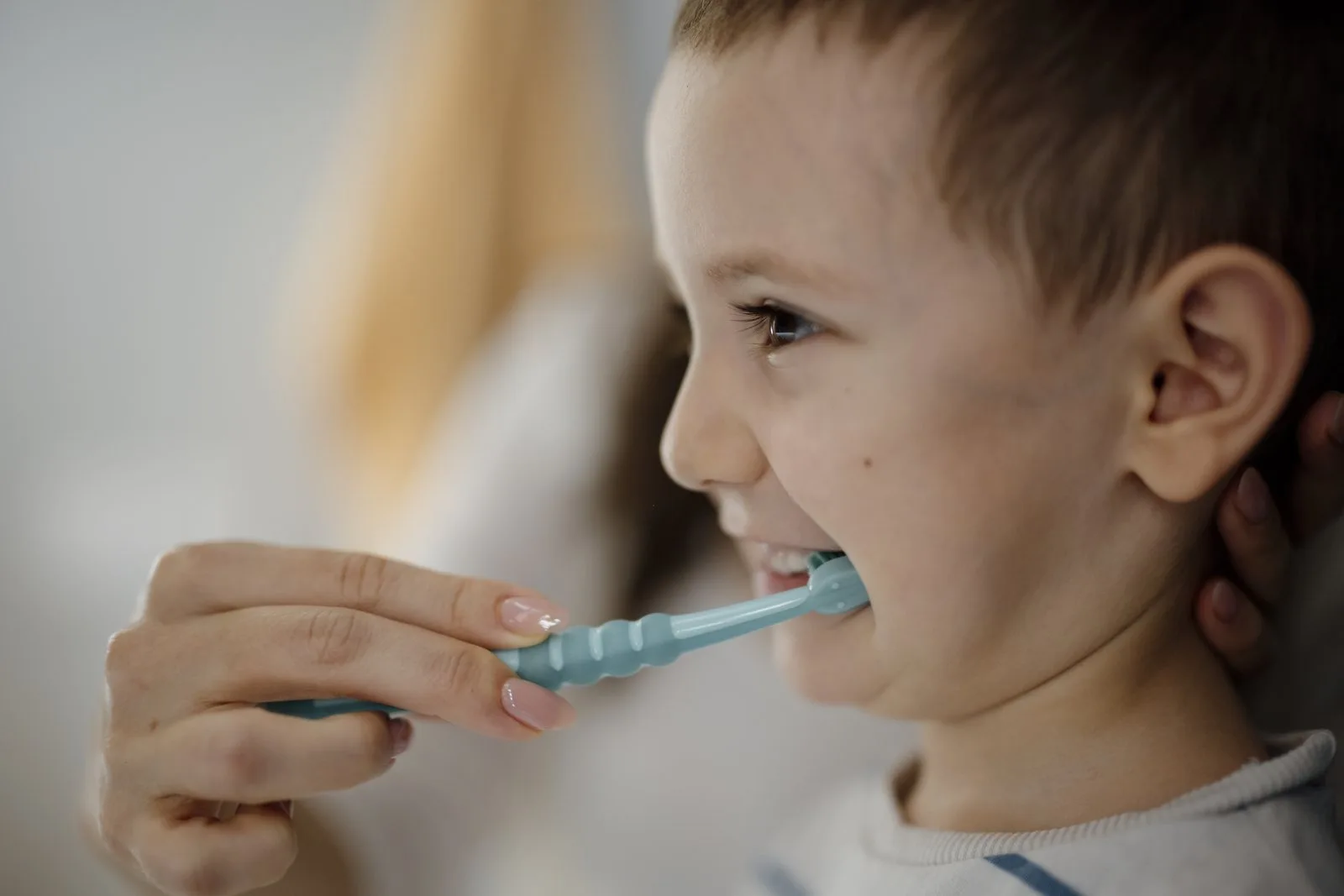
It was a Saturday morning. A four-year-old girl was hiding behind her father's leg, a rabbit with one torn ear tucked under her arm. Her dad held out his phone with a photo of her front teeth. There was a brown line close to the gum on the upper incisors. "Doctor, she falls asleep with her bottle at night. Her mum couldn't stop it and, honestly, I didn't mention it." They had come by metro from Kurtkoy. He had searched for a pediatric dentist in Pendik and looked for somewhere open on a Saturday. We didn't look into her mouth straight away that morning. First we looked at the rabbit's teeth.
When should a child first see a dentist?
Most families make the first visit when something hurts. I understand. Nobody wants to take a healthy-looking child to the dentist for no reason. But when the first visit comes with pain, the child links that door with pain, and undoing that can take weeks.
A first check-up is recommended once the first tooth appears and around the first birthday. At that age we are not treating anything. A parent holds the child on their lap, the child looks at the light, gets a mirror to hold, and we glance at the teeth and talk about brushing habits. It takes ten minutes, sometimes five. Sometimes the child won't open their mouth at all. That happens too, it waits for the next visit, and nobody calls it a failure.
After that, a check-up every six months is enough for most children. For kids who are prone to decay, love sweets or already have a filling, we shorten the interval. Our children's dentistry page explains this schedule in more detail.
What happens at a pediatric dentist in Pendik?
Pediatric dentistry is the dental specialty for children, and some families search for it under its medical name, pedodontics. The exam itself is not very different from an adult one. The difference is in the pace.
- First we talk with the child. We ask about school, their favorite cartoon, whether they have a brother or sister.
- We introduce the tools. The mirror becomes the "tooth mirror", the air spray becomes "wind", the suction becomes a "straw".
- We count the teeth and check for decay, color changes, the gums and the bite.
- If needed, an X-ray is taken. Our Pendik clinic has a panoramic X-ray, but small children often don't need one.
- Parents get a short talk about brushing, diet and night-time habits.
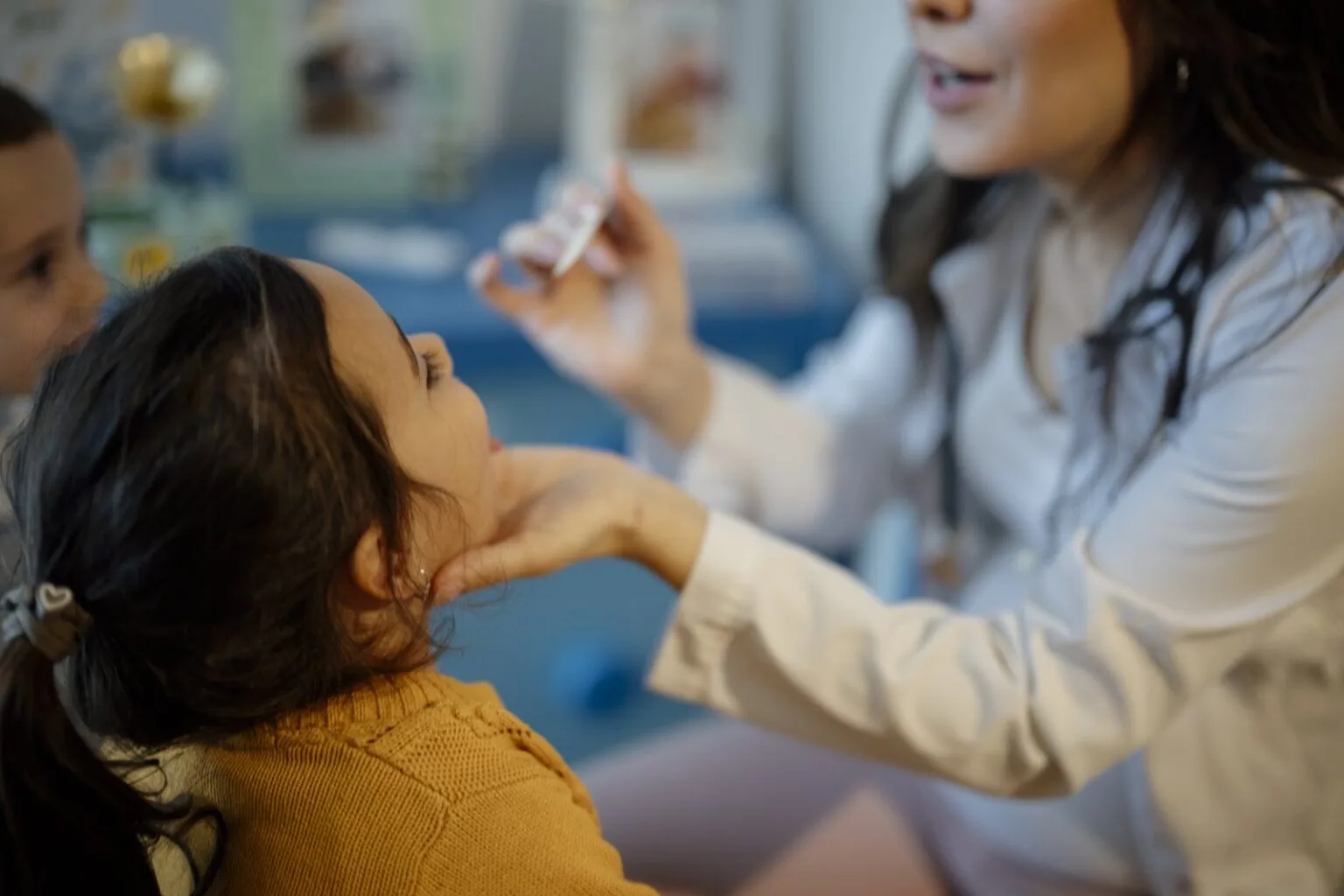
We call this "tell, show, do". We say what we will do, show it on the tip of their finger, then do it in their mouth. No surprises. None. Children don't like surprises, least of all in their mouths.
How do you prepare a child who is afraid of the dentist?
This part is really for parents, because much of the fear comes from home, through well-meant sentences.
Please don't say "it won't hurt at all". The child hears that and starts thinking about pain. Don't say "no needles" either, for the same reason. Say something plain instead. "The dentist will count your teeth and check that they are clean."
Playing at home helps. Use a spoon as the mirror and count the teddy bear's teeth. The rabbit from Kurtkoy did exactly this job. We looked at the rabbit's teeth, brushed them, and when it was the girl's turn she opened her mouth by herself.
One request. Please don't tell your own dental horror stories in front of your child. "When I was little I was terrified, they pulled a tooth out" is the story I hear most often in the waiting room, and it spoils the most visits.
Don't bring your child to the appointment hungry or sleepy. If after-school slots are tiring for them, a Saturday morning is often easier.
For some children, with very young age, many cavities and no cooperation in the chair, treatment under general anesthesia can come up. That is planned separately in a hospital setting and is not needed for every child. We always try patience first, with a few short visits.
What is baby bottle tooth decay and why does a night bottle damage teeth?
That brown line is what people call baby bottle decay. Dentists call it early childhood caries. It usually starts on the upper front teeth, because the milk or juice sucked at night pools there.
During sleep, saliva flow drops. The sugar left in the mouth feeds bacteria all night long. Even if the teeth are brushed in the morning, the damage has already been done overnight.
What can you do?
- Switch the night bottle to water slowly. Stopping in one night is hard, so spread it over a few weeks.
- Don't put juice, sweetened milk or honey water in the bottle.
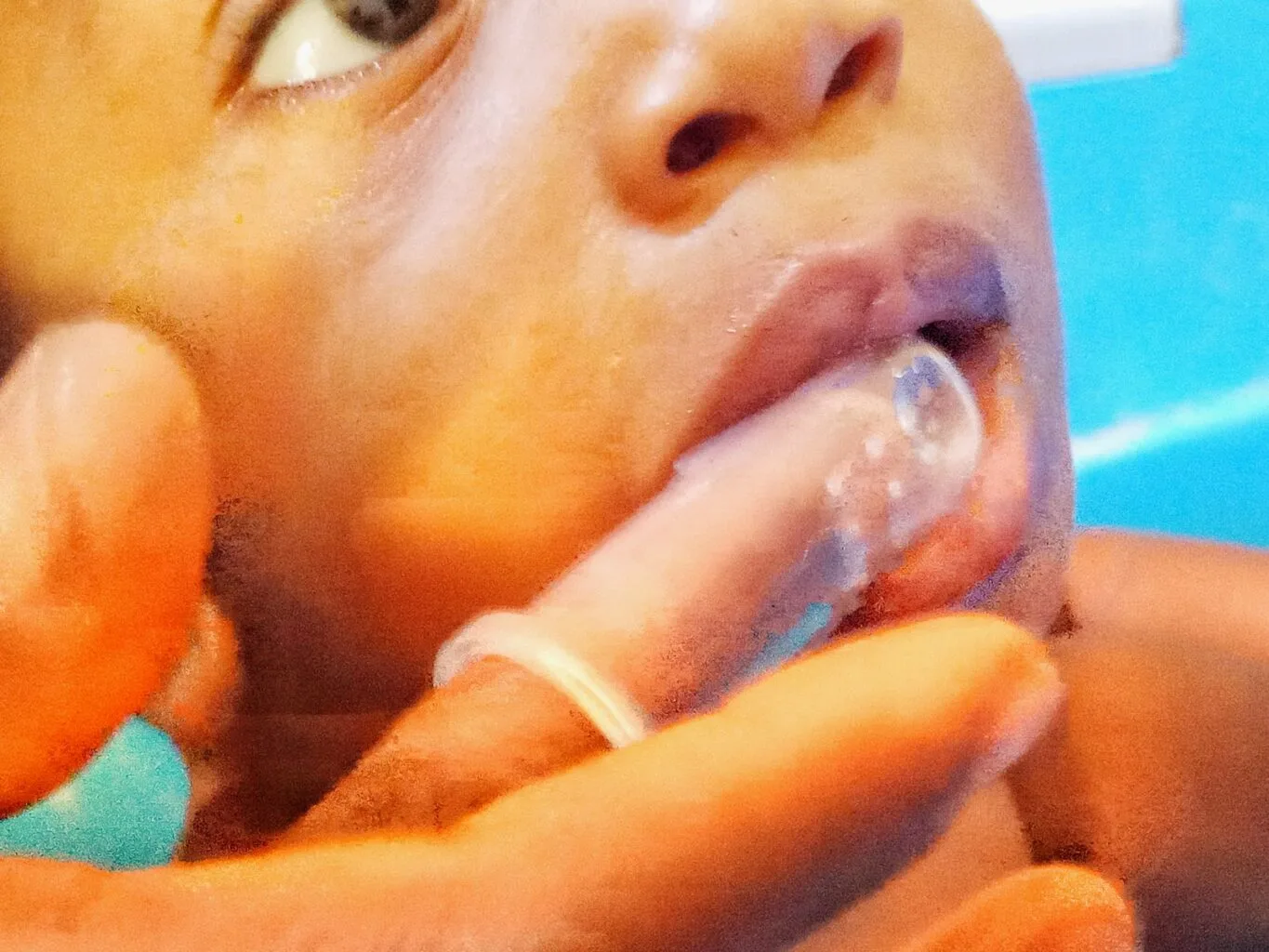
- From the day the first tooth appears, wipe or brush the teeth twice a day.
- If you see white chalky spots on the front teeth, don't wait. This may be the first, reversible stage of decay.
We told that dad the same things. "I'll tell her mum myself, if you do it there'll be an argument," he said, laughing. The line on his daughter's teeth was still on the surface. We applied fluoride, and the parents made a plan for the night bottle.
Should baby tooth decay be treated, since the tooth will fall out anyway?
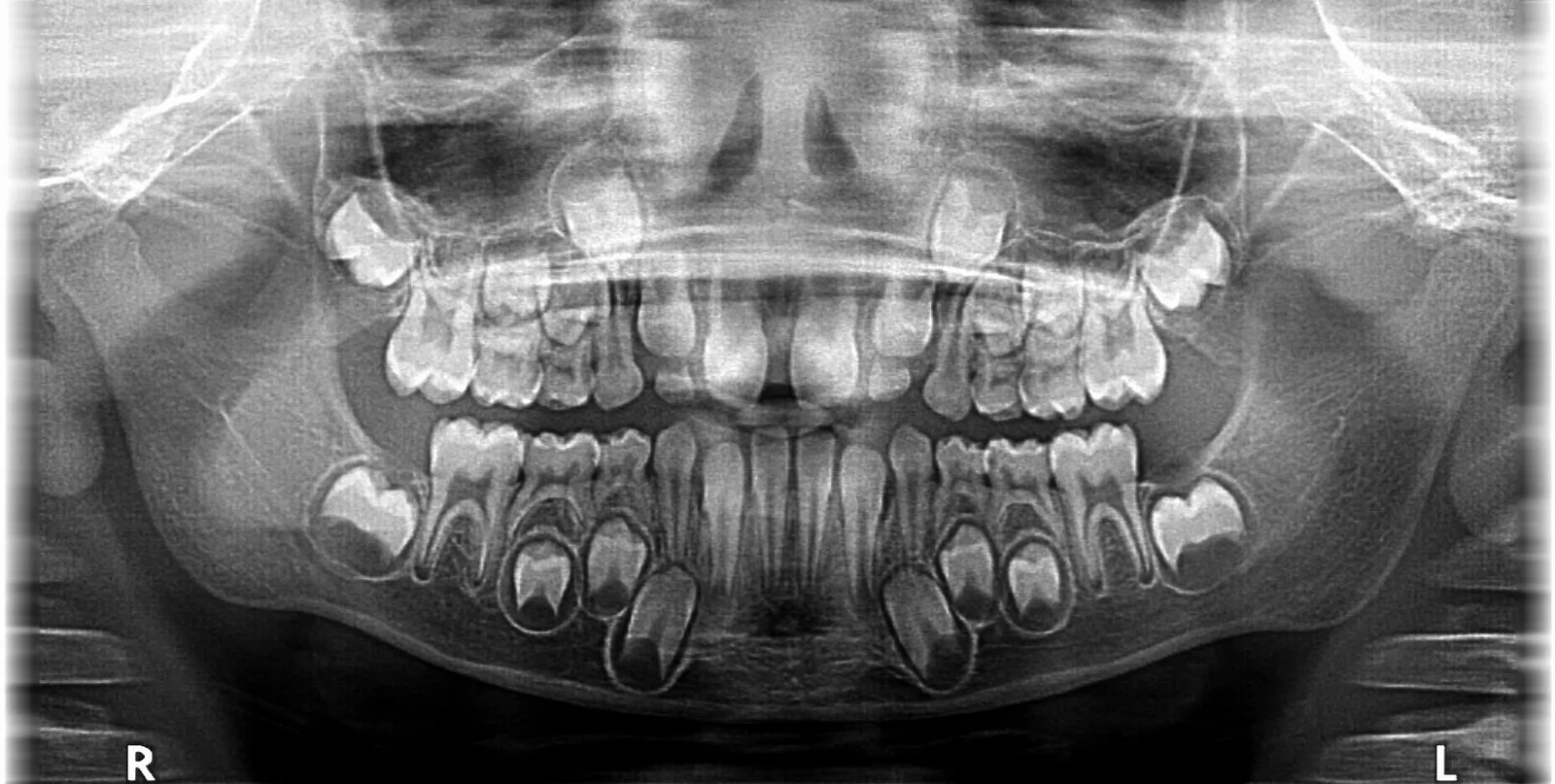
I hear this question several times a week. The short answer is yes. Baby teeth hold the place for the permanent teeth. In some children the back baby molars stay in the mouth until eleven or twelve. So a four-year-old's decayed molar has to work for another seven or eight years.
If a baby molar is pulled early, the tooth behind it drifts forward. The permanent tooth coming up below can't find room, and crowding begins. If the decay gets deeper, pain, swelling and sleepless nights follow. Much of what we wrote for adults in why do teeth hurt applies to children too, though children describe pain with more difficulty.
Can a baby tooth have a root canal treatment?
Yes, but not in the same way as an adult tooth. If decay has reached the nerve, we often remove only the top part of the nerve and keep the living tissue in the root. This is called a pulpotomy. If the whole nerve is affected, the canals are filled with a material made for baby teeth, one that is allowed to dissolve over time. You can read about the adult process in how is a root canal treatment done.
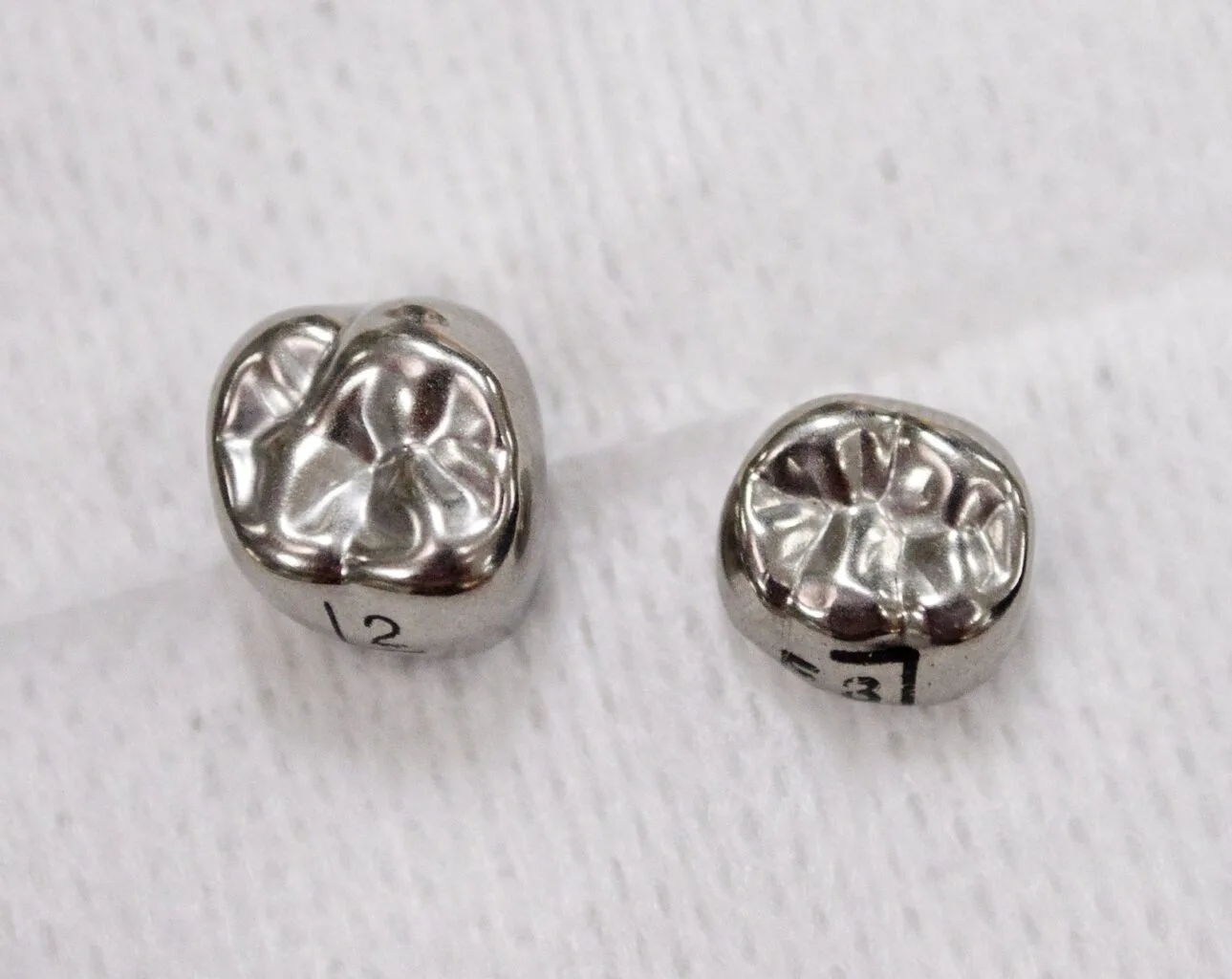
For large cavities, or after a root canal, a ready-made metal crown can be fitted over the baby molar. The first reaction of many parents is "will it be a silver tooth?" Yes, silver in color. But it keeps the tooth sound until it falls out and doesn't harm the permanent tooth underneath.
What are fluoride varnish and fissure sealants for?
Both are preventive treatments, and neither needs an injection or a drill. Children usually remember them as "painting the teeth".
Fluoride varnish is a sticky liquid brushed onto the tooth surface. It strengthens the enamel against acid attacks. In children prone to decay it is applied twice a year. The Cochrane fluoride varnish review shows that it reduces decay in both baby and permanent teeth. After it is applied, avoid hard and hot food for a few hours and skip brushing that night, that's all.
A fissure sealant is a thin resin placed in the deep grooves on the chewing surface of the molars. Toothbrush bristles don't reach into those grooves, so food and bacteria settle there. The sealant closes them off.
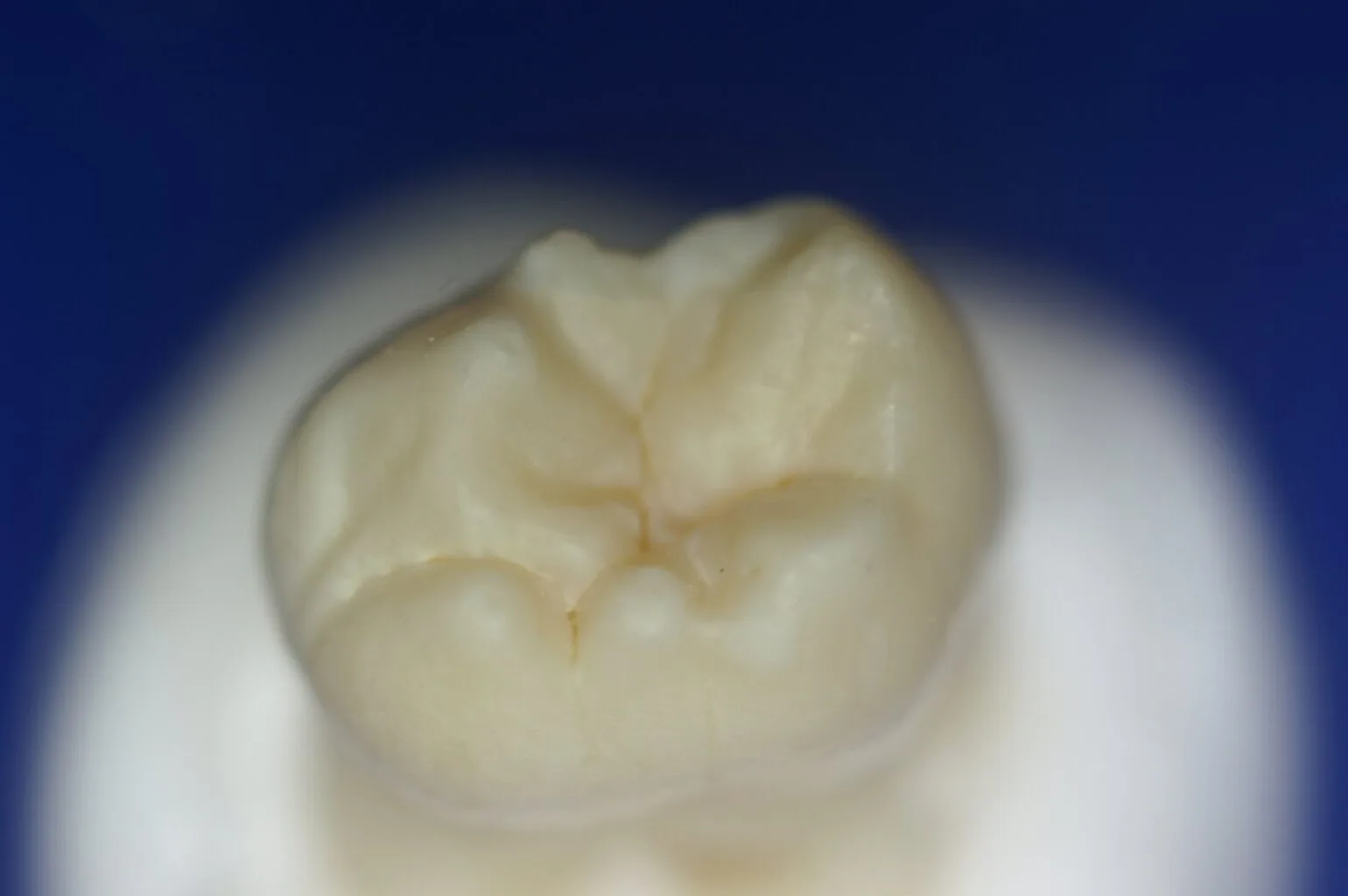
We recommend it most for the six-year molars. They come in quietly behind the baby teeth, and families often think they are baby teeth. They are not. They are the first permanent molars and will stay for life. The Cochrane sealant review reports a clear drop in decay risk on these teeth. Sealants can wear down over time, so we check them at visits and renew them if needed.
How should children brush their teeth and how much toothpaste is right?
Here is what surprises families most. Until the age of seven or eight, an adult should brush the child's teeth, or at least finish the brushing. A child's hand skills are not enough to clean the back teeth alone.
| Age | Amount of toothpaste | Who brushes |
|---|---|---|
| From the first tooth to age 3 | A grain of rice, fluoride | Mum or dad |
| Ages 3-6 | A pea, fluoride | Child starts, adult finishes |
| Age 7 and over | A pea | Child brushes, adult checks now and then |
Two minutes, twice a day, and one of those times must be before bed, because saliva drops at night and the teeth stay unprotected until morning. Don't have the child rinse with lots of water after brushing, just spit. Let the fluoride in the paste stay on the teeth. The NHS guide to children's teeth says the same.
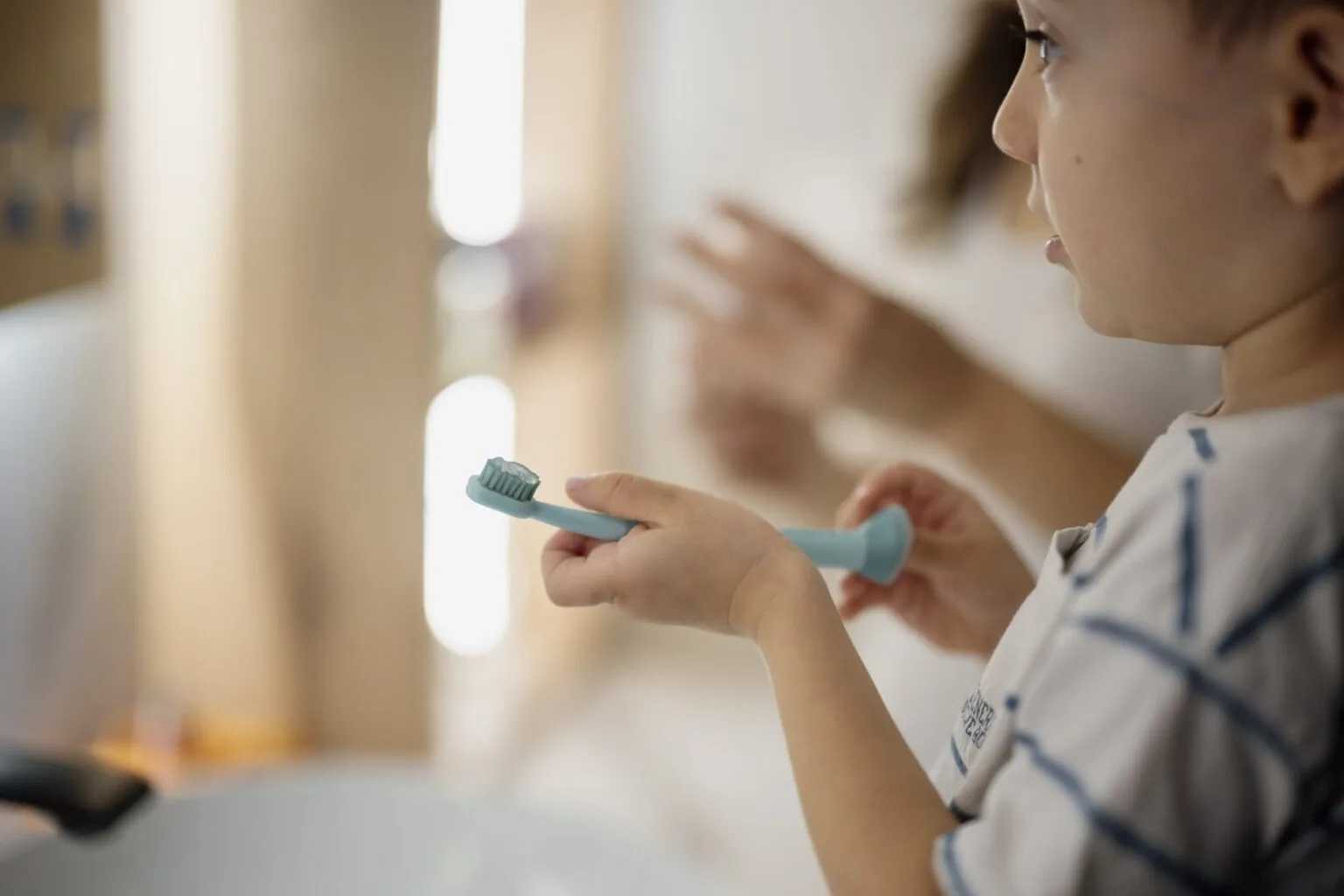
A practical tip. Lay the child down, rest their head in your lap and look from above. It is much easier than brushing face to face while standing. They'll protest for the first few nights, then get used to it.
Which dental problems are common in school-age children?
The picture changes once children start school. Packaged snacks from the canteen, sweet drinks sipped all day and things eaten between lessons put a different load on the teeth. The issue is less the amount of sugar than how often it is eaten. A dessert after dinner is less harmful than small bites every half hour through the day.

Other things we often see.
- Double row of teeth. The permanent lower front tooth comes in behind a loose baby tooth. Parents panic. Most of the time the baby tooth falls out within a few weeks and the permanent tooth moves forward with tongue pressure. If the baby tooth isn't loose at all, or months have passed, we should take a look.
- Early decay in the six-year molar. As I described above, it gets neglected because it is mistaken for a baby tooth.
- Bleeding gums. It happens in children too, and is often a sign of insufficient brushing. The tips in bleeding gums can be adapted for children.
- Mouth breathing and night-time grinding. Sometimes these call for an ear, nose and throat or orthodontic assessment.
What should you do if a child's tooth breaks or gets knocked out?
School yards, parks, football pitches, bicycles. Front tooth injuries are most common between ages seven and twelve. Staying calm is hard, I know. But what is done in the first half hour affects the result a lot.
If a permanent tooth is knocked out
Hold the tooth by the crown, not the root. If it is dirty, rinse it for a few seconds with milk or salt water and don't scrub it. If possible, put it back in its socket and have the child bite on a clean cloth. If that doesn't work, place the tooth in a glass of milk and come to a dentist right away. The first hour matters a great deal.
If a baby tooth is knocked out we don't put it back, because it could harm the bud of the permanent tooth underneath. We should still examine the child. If you found the broken piece, bring it too, because sometimes it can be bonded back. If there is a cut on the lip or tongue and the bleeding doesn't stop in ten minutes, go to an emergency room.
When should a child have an orthodontic check?
We suggest an orthodontic assessment around age seven. Not to put on braces, but to see where things are heading. At this age jaw growth can still be guided. If there is a crossbite, a protruding jaw or a thumb-sucking habit, early action can shorten treatment later on.
For most children the result of this visit is "all is well, let's look again in a year". When treatment is needed, it often starts once most of the permanent teeth have come in. We compared the options for teenagers in clear aligners or braces.
Which time suits a pediatric dentist appointment in Pendik?
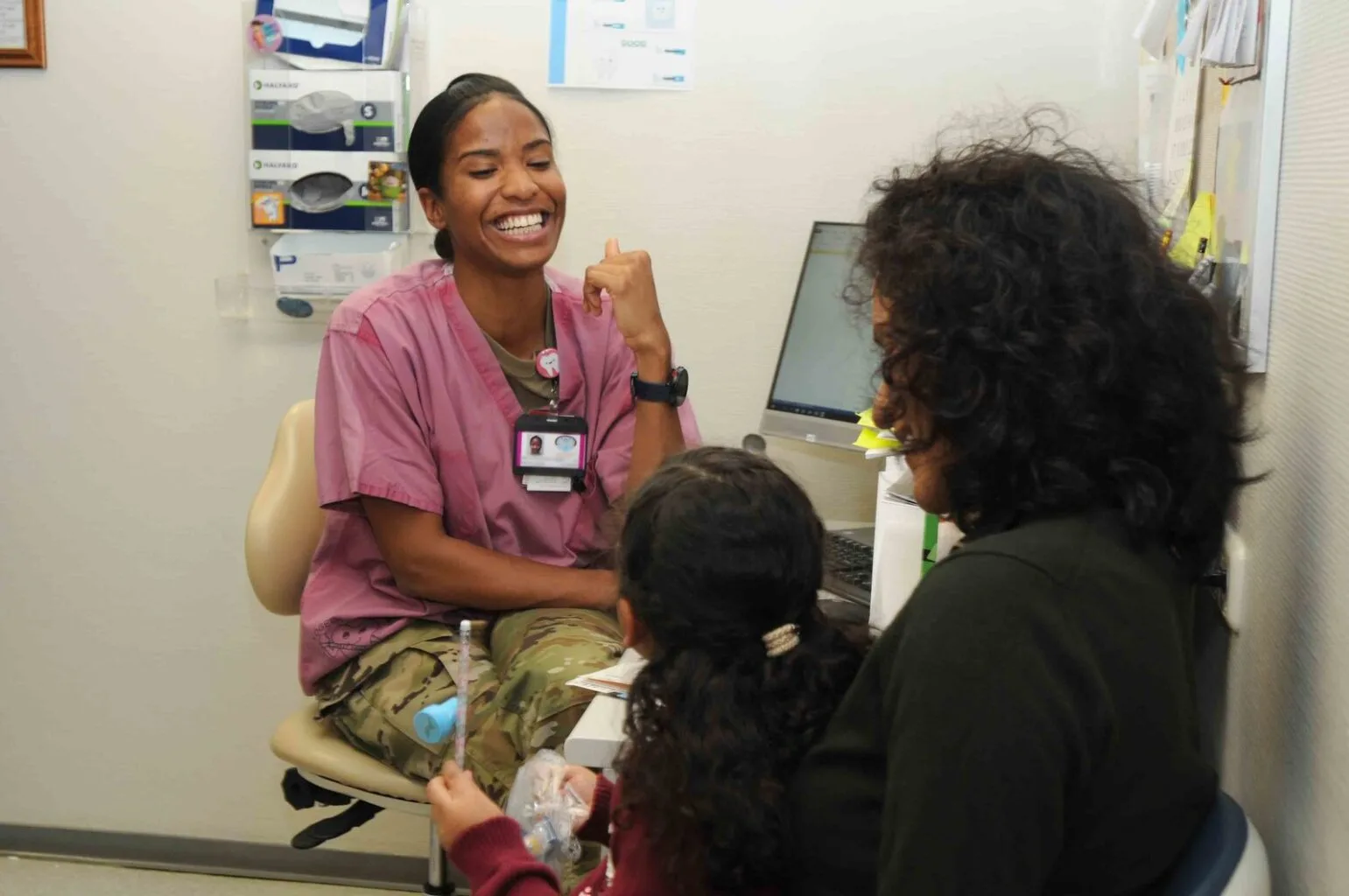
It depends on the child. For a preschooler, mornings usually go better. For school-age children, after school or Saturday is preferred. Our Pendik clinic is open Monday to Saturday from 9 am to 10 pm and closed on Sunday.
We are in central Pendik, in the Yeni neighborhood on Sureyyapasa Street. The Marmaray Pendik station is about 400 meters away. Families from Kaynarca and Tuzla usually come by train, and those from Kurtkoy by metro. We described the route and the neighborhoods in detail in our Pendik dental clinic guide. The address and map are on our Pendik branch page.

One more thing. An appointment with a tired, hungry or sleepy child usually ends up cut short. We don't recommend slots after eight in the evening for small children, but they suit teenagers well. Some high schoolers come after their tutoring classes and find it comfortable.
What decides the cost at a children's dental clinic in Pendik?
We don't give figures here, and the reason is simple. One child may have no decay at all, while another needs six teeth treated. One finishes in a single session, another takes four or five sessions including settling-in visits.
What decides the cost is usually the number of teeth to treat, how deep the decay is, whether a root canal or crown is needed, how many sessions it takes and whether X-rays are needed. Preventive care such as fluoride and sealants is much simpler than fillings and root canals. Saying that a family who comes early has fewer and simpler procedures is, I think, the most honest answer I can give to the question of cost.
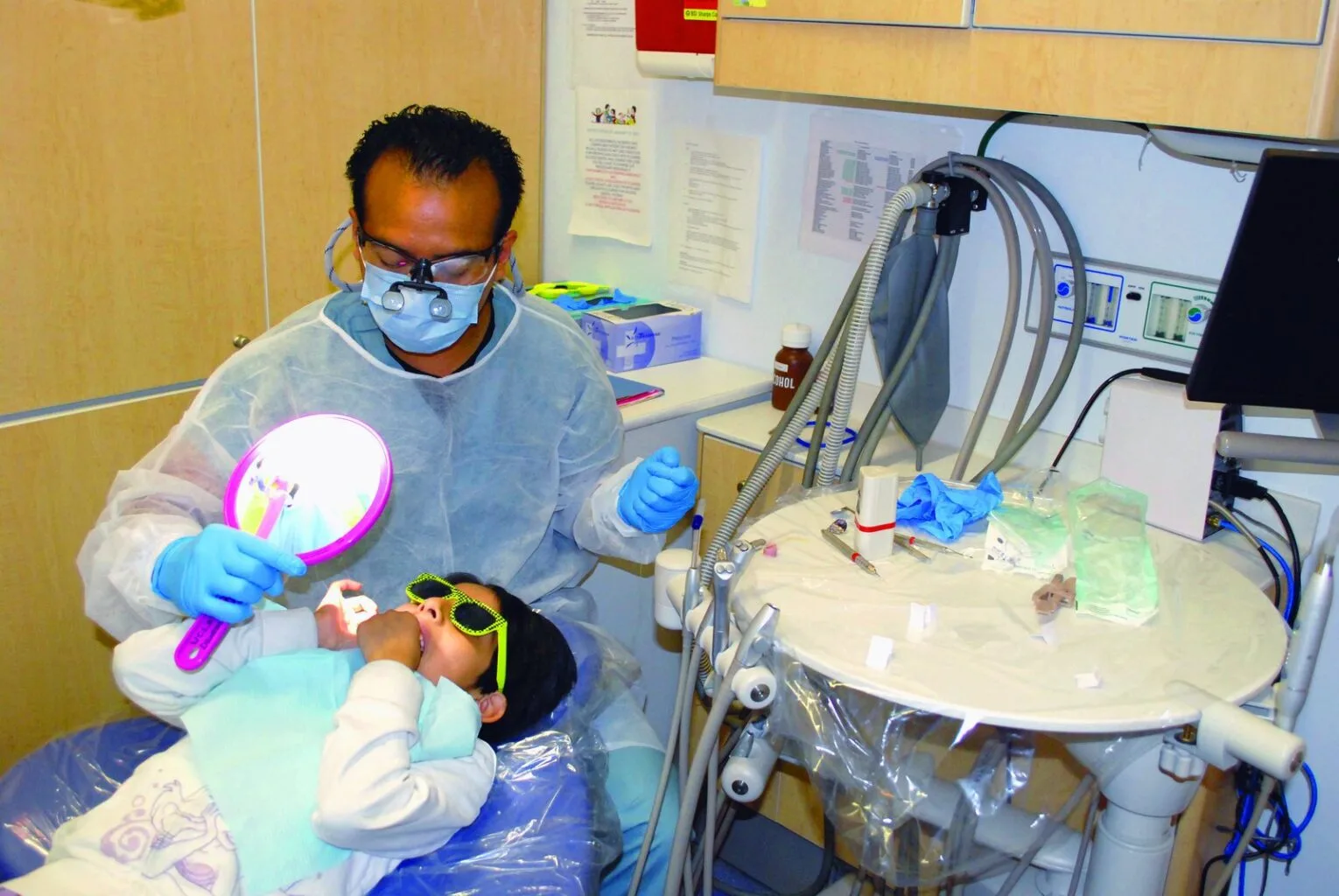
After the exam we explain what will be done on which tooth, which one can wait, and the order. Separating what is urgent from what can wait matters both for not tiring the child and for planning a budget. The World Health Organization oral health fact sheet reminds us that tooth decay is the most common chronic disease among children worldwide. Preventing it is easier than treating it in every way.
Frequently asked questions
At what age should a child first see a dentist?
A first check-up is recommended once the first tooth appears and around the first birthday. Treatment is usually not done at this visit, the child gets used to the setting and the family is advised on brushing and diet. After that, a check-up every six months is enough for most children.
Is the pediatric dentist in Pendik open on Saturdays?
Our Pendik clinic is open Monday to Saturday from 9 am to 10 pm and closed on Sunday. We suggest morning hours or Saturday for small children, and after-school hours for school-age children.
Should baby tooth decay be treated?
Yes. Baby teeth hold the place for the permanent teeth, and the back baby molars can stay in the mouth until eleven or twelve. A baby tooth that is pulled early or left untreated can lead to pain, swelling and later crowding.
How can baby bottle tooth decay be prevented?
The most effective steps are to switch the night bottle to water slowly, to keep sweet drinks out of the bottle and to clean the teeth twice a day from the first tooth. If white chalky spots appear on the front teeth, see a dentist without waiting.
Do fissure sealants and fluoride varnish hurt?
Both are applied onto the tooth surface without an injection or a drill. Most children tolerate them easily. After fluoride varnish it is enough to avoid hard and hot food for a few hours.
Can a baby tooth have a root canal treatment?
Yes. If decay has reached the nerve, often only the top part of the nerve is removed, which is called a pulpotomy. If the whole nerve is affected, a root canal is done with a material suited to baby teeth and the tooth is usually protected with a ready-made crown.
What should be done if a child's permanent tooth is knocked out?
Hold the tooth by the crown, rinse it gently with milk if dirty and put it back in place if possible. If that isn't possible, place it in a glass of milk and go to a dentist right away. Acting within the first hour raises the chance of saving the tooth.
What should you say to a child who is afraid of the dentist?
A plain explanation such as "the dentist will count your teeth and check that they are clean" works better than "it won't hurt" or "no needles". Playing a dental check-up game with toys at home, and parents not sharing their own fears, also calms the child.
When should a child have an orthodontic check?
An assessment is suggested around age seven. The aim is not to put braces on every child but to see jaw growth and tooth order early. For most children the outcome is another check in a year.
That Saturday morning, as she walked out of the clinic door, the girl held her rabbit up in the air. "His teeth are clean too," she said. Her dad took out his phone and put the next check-up in the calendar, six months away. That was exactly what we had hoped for.
Let's plan your child's first check-up on a calm day, before any pain starts. Write to our Pendik clinic for an after-school or Saturday morning slot. Contact page