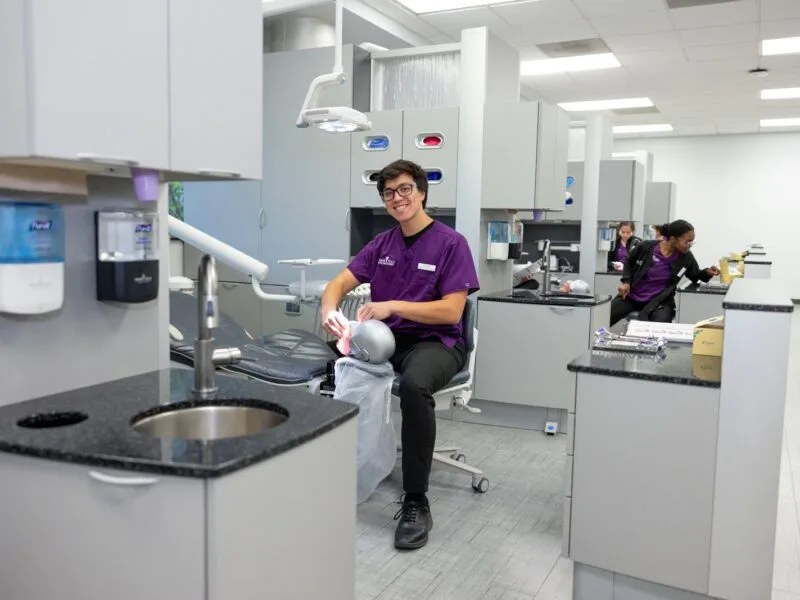
Children's dentistry (paediatric dentistry, or pedodontics) is the field of dentistry concerned with protecting and treating children's baby and permanent teeth from infancy to adolescence, and with monitoring jaw development. The aim is to protect your child's oral health while helping them build a calm relationship of trust with the dentist. Appointments mostly last 20-40 minutes and are planned according to the child's age and cooperation.
When should I first take my child to the dentist?
The first dental visit is recommended after the first baby tooth comes through and by around the age of 1 at the latest. This first visit is mostly an introduction and information appointment. The teeth and mouth tissues are checked briefly, and we talk with you about diet, bottle and dummy habits, brushing and the use of fluoride. Regular check-ups that start early make it easier to spot problems while they are small and to help your child get used to the clinic.
Some situations should not wait for the next check-up: if you notice white chalky or brown spots on the teeth, your child always chews on the same side, or there is swelling on the gum, book an examination. These signs can point to early decay or infection, and when found early they can be treated with simpler methods.
What happens at the first appointment?
The first appointment is an introduction where your child gets to know the clinic, the chair and the dentist without being rushed. The instruments are shown through play and in words the child understands; the movement of the chair, the water and the air spray are tried together. If the child feels ready, the teeth are counted and a simple examination is done. Treatment does not have to be carried out at this stage.
What you can do as a parent:
- Describe the visit as an ordinary, positive outing rather than turning it into a bargain for rewards.
- Keep explanations simple: "We will count your teeth and make them shiny" is enough, and the details can be left to the dentist.
- Book the appointment for a time when your child is rested and has eaten.
- Try not to talk about your own dental experiences in a negative way in front of your child.
What preventive treatments are there for children?
Preventive treatments aim to strengthen the teeth before decay forms and to protect the surfaces most prone to it. The main ones are:
- Fluoride varnish: A treatment painted onto the tooth surface with a small brush that strengthens enamel. It takes a few minutes and, depending on the decay risk, 2-4 times a year may be recommended.
- Fissure sealants: The deep grooves on the biting surface of the molars are closed with a flowable material. Permanent molars usually come through at around ages 6 and 12, and sealing is considered once they have erupted. No tooth is removed and no numbing is needed.
- Regular check-ups: For children with a low decay risk, a check-up every 6 months is usually recommended; if the risk is high, the interval can be shorter.
Should a decayed baby tooth be treated?
Yes, decayed baby teeth should be treated, because they are needed not only for chewing but also for speech development and for holding space for the permanent teeth underneath. Untreated decay can progress to pain, abscess and effects on the permanent tooth developing below. Some baby molars stay in the mouth until the age of 10-12.
Treatments used depending on the depth of the decay:
- Filling: For superficial and moderately deep decay.
- Baby tooth root treatment (pulpotomy or pulpectomy): When decay reaches the nerve, to keep the tooth until it falls out naturally.
- Children's crown: For baby molars that have lost a lot of structure, to wrap the tooth as a whole.
- Extraction and space maintainer: If a baby tooth that cannot be saved is removed early, a space maintainer may be planned to hold the place of the permanent tooth.
Which method is suitable is decided after the examination and, if needed, an X-ray.
How do I protect my child's teeth at home?
The basis of protecting your child's teeth is brushing twice a day with fluoride toothpaste and cutting down how often sugary foods are eaten. Practical advice:
- Use a smear of fluoride toothpaste the size of a grain of rice under 3 years and a pea-sized amount at 3-6 years.
- Help with brushing, or go over the teeth afterwards, until your child can brush properly alone, usually until about 7-8 years.
- Do not give milk or juice in a bottle at bedtime; after brushing give only water.
- Keep sugary snacks to mealtimes rather than spreading them through the day.
- Flossing can start once the teeth begin to touch each other.
At what age should an orthodontic assessment be done?
A first orthodontic assessment is usually recommended at around 7 years, when the permanent molars and front teeth have begun to come through and problems with jaw development can be noticed. Not every child needs treatment at this age; often only monitoring is done. Early intervention may be considered with thumb sucking, mouth breathing or a narrow palate. For braces and aligner options see our clear aligners and orthodontics page.
What should I do after a fall or knock to the teeth?
If your child has fallen and hit a tooth, especially if a tooth is broken, loosened or knocked out completely, see a dentist the same day. A permanent tooth that has been knocked out completely should be held by the crown, not the root, kept in milk and brought to the clinic as soon as possible. A baby tooth that has been knocked out is not put back, but it still needs to be checked. You can find general information about emergencies in our emergency dentist article.
Children's dental examination in Haliç and Pendik
At the Haliç and Pendik clinics of Panorama Oral and Dental Health, introduction appointments, preventive treatments and baby tooth treatments are planned for children. When you book, telling us your child's age, any complaint and earlier dental experiences helps us set a suitable length and time. For Haliç clinic details see the Haliç clinic page.
Sources
The results of any surgical or interventional procedure may vary from person to person. It is recommended that you obtain detailed advice from your physician before the procedure. The information on this page is for general informational purposes; the treatment suitable for you is determined after an examination.