Tuesday morning, a little before ten. A man in his thirties sat down in the chair and, before he had even opened his mouth, took a pack of mint gum out of his pocket and set it on the tray. "I get through two packs a day," he said, "and my colleague still pushes her chair back a bit in meetings." Then he dropped his voice. "My wife has started saying it too. Bad breath, apparently."
Bad breath is the subject patients raise in the quietest voice. Most people blame the stomach first, then reach for gum and mints, and finally for some baking soda mouthwash recipe they found online. In reality the bulk of the smell comes from inside the mouth, and it usually comes from a spot you can actually find. The back of the tongue, the gum pockets, the edge of an old filling, the underside of a bridge. Below I go through these sources one by one, in a way you can check at home yourself.
What is bad breath, and why can't you smell your own?
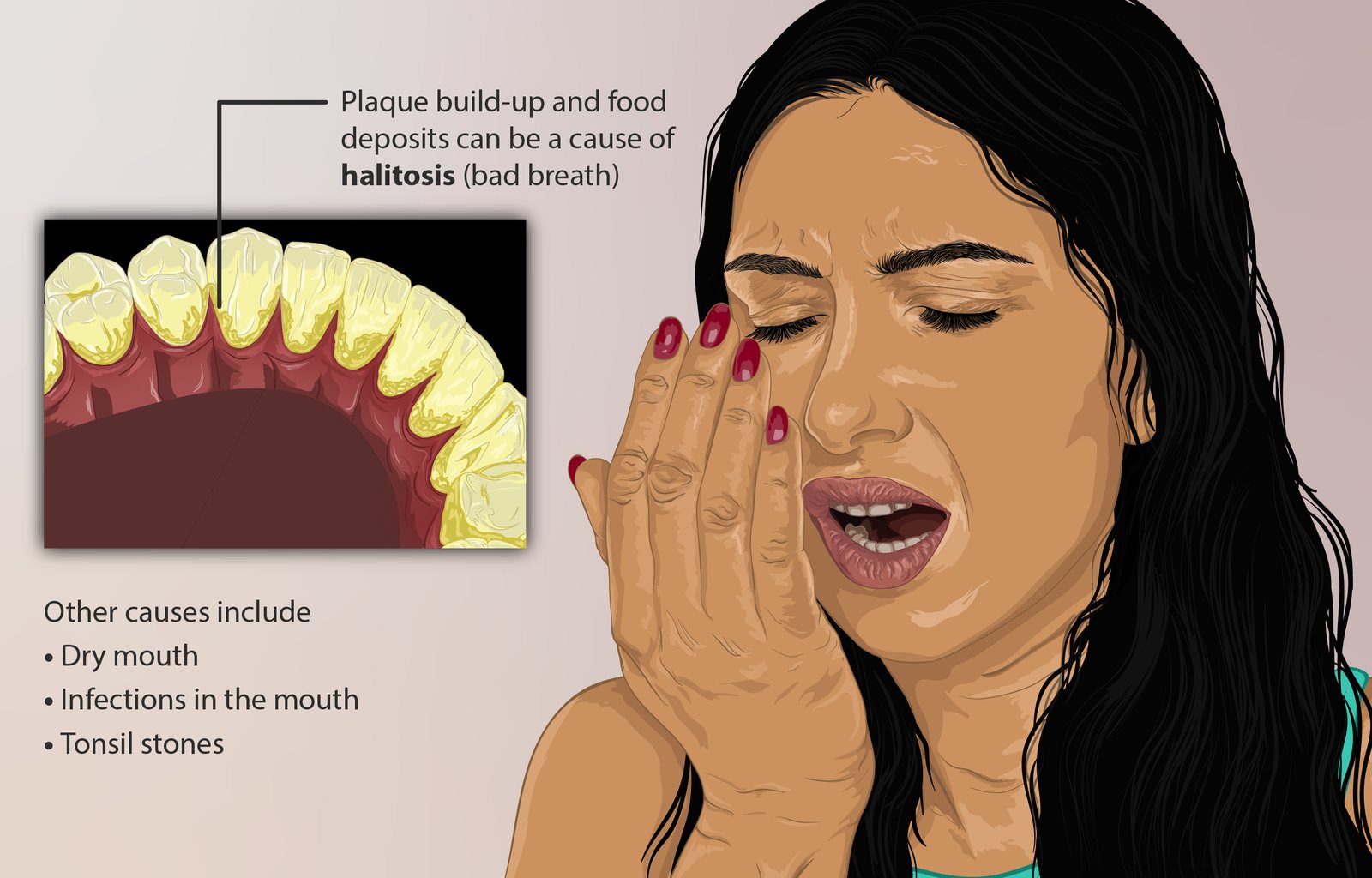
Bad breath, known medically as halitosis, is a persistent unpleasant smell on the breath that the people around you notice. Behind it are volatile sulphur compounds, released when bacteria in the mouth break down food debris and shed cells. Chief among them are hydrogen sulphide, which smells of rotten eggs, and methyl mercaptan, which is closer to old cabbage.
So why can't we smell our own? Our nose gets used to anything it is exposed to all day, files it under background and stops reporting it. It is the same reason you stop noticing the perfume you put on in the morning by mid-afternoon. Cupping a hand over your mouth and sniffing therefore tells you very little.
How common is it? Literature reviews on halitosis suggest that somewhere between a quarter and a half of adults notice a clear breath odour from time to time. There is a flip side too. We also see patients with no odour at all who are convinced they smell, who keep their distance in conversation and hold their breath in lifts. This is called halitophobia, and it wears a person out at least as much as the real thing.
What causes bad breath? Most of the time the source is inside the mouth
The great majority of cases have an oral source, and the figure you often see quoted is eight or nine out of ten. A systematic review lists coatings on the tongue and gum disease among the factors most strongly linked to the smell. Sinuses, tonsils, the stomach and general illnesses share the small remainder. That is actually good news.
Roughly speaking, this is the map we carry in our heads during an examination.
| Source | What you might notice yourself | What it usually needs |
|---|---|---|
| Tongue coating | A white or yellow layer at the back of the tongue, a clear smell on the spoon test | Cleaning the tongue every day |
| Gum disease and gum pockets | Bleeding when brushing, swelling, gums pulling back | Tartar removal, gum treatment if needed |
| Decay, a broken filling, an overhanging crown edge | Food catching around one particular tooth, a smell coming from a single spot | Replacing the filling or crown, root canal treatment if needed |
| Under a bridge or denture | A smell on the floss when you thread it under the bridge, a denture left in overnight | Special floss, taking the denture out and cleaning it every night |
| Dry mouth | A sticky mouth, frequent thirst, regular medication | Water, sugar-free gum, talking to your doctor about the medication |
| Tonsil stones | A feeling of something stuck in the throat, white bits coughed up | ENT assessment |
| Sinusitis, postnasal drip | A blocked nose, mucus running down the throat | ENT assessment |
| Reflux and the stomach | Sour belching, heartburn | Gastroenterology assessment |
There is one more corner that people overlook. The flap of gum over a half-erupted wisdom tooth traps food and gets inflamed, and the smell that follows often arrives together with a faint ache at the very back of the mouth. A brush barely reaches the area, so the problem drags on. Everybody forgets that spot. We wrote about it separately in wisdom tooth removal and aftercare.
Can gum disease cause bad breath?
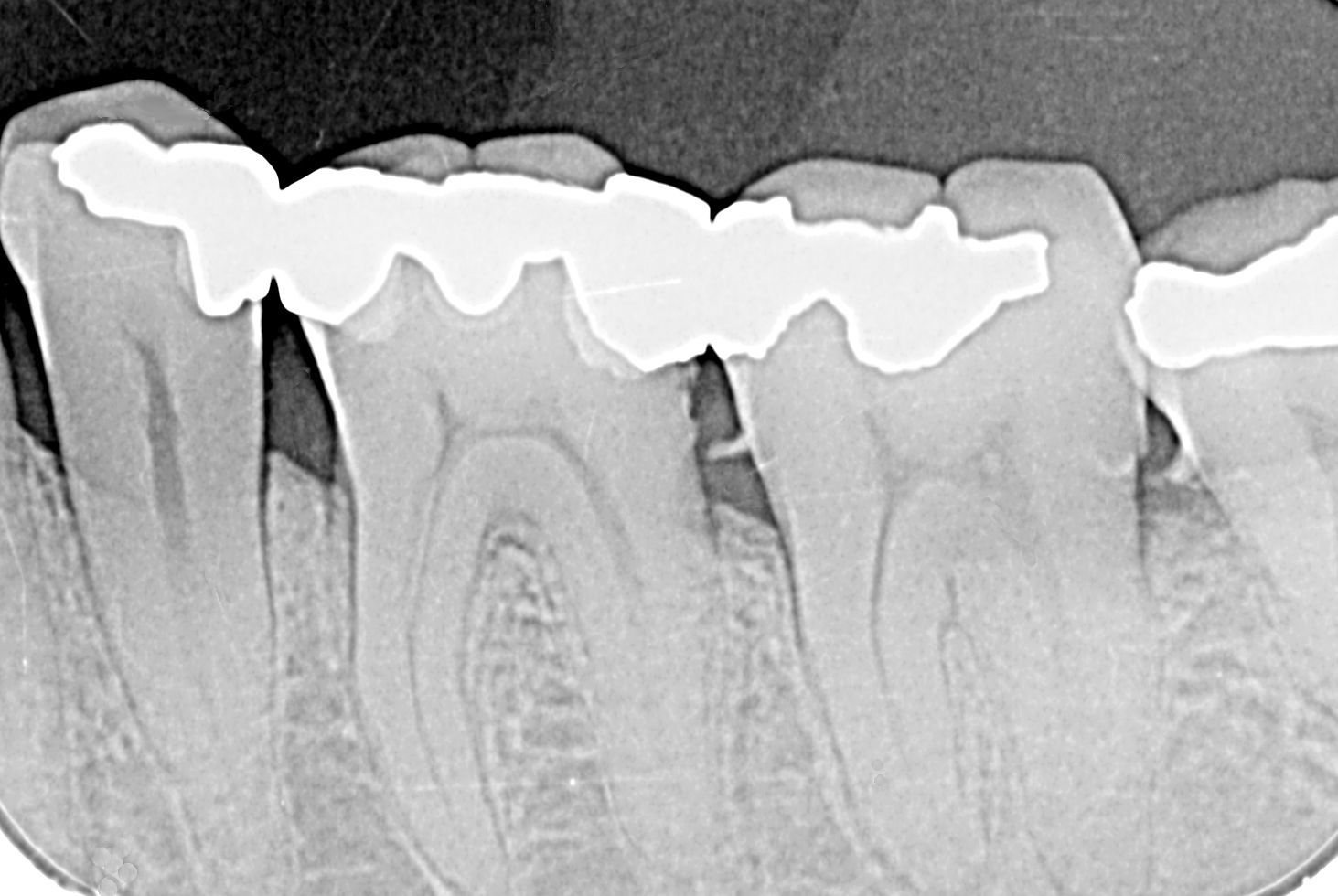
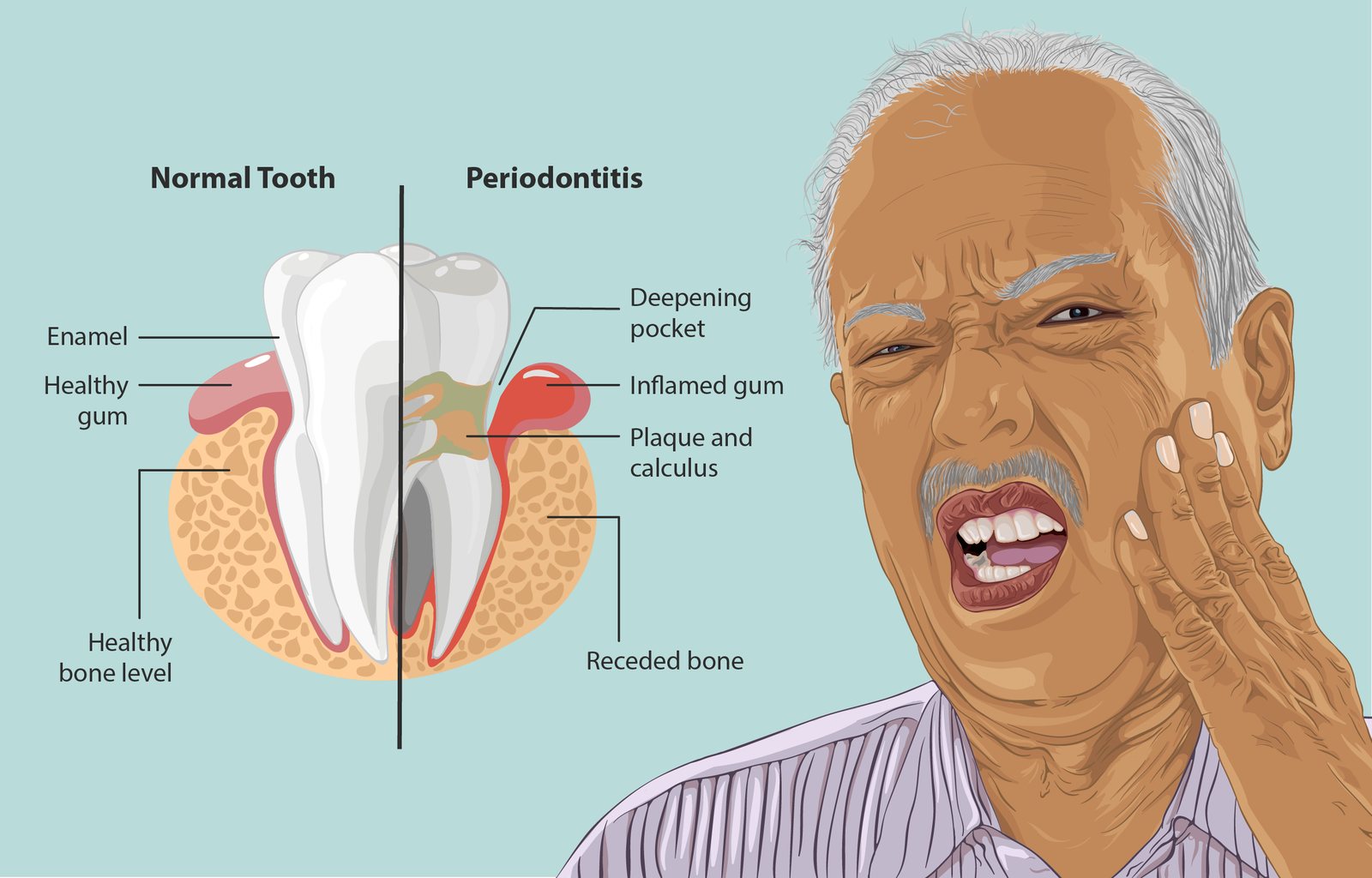
It can, and it is one of the most common reasons. A healthy gum fits snugly against the tooth. Once it becomes inflamed, gaps called pockets open up between tooth and gum, the bottom of each pocket runs out of oxygen, and sulphur-producing bacteria love exactly that kind of place. Deeper pocket, heavier smell. A toothbrush never reaches that depth.
Patients often say, "It bleeds a little when I brush, but it has always done that." To be honest with you, "it has always done that" does not make something normal. It only tells me it has been going on for a long time. Bleeding gums are inflamed gums. It really is that simple. You will find the first steps to take at home in what causes bleeding gums.
Advanced gum disease, in other words periodontitis, is far more common than most people think. The World Health Organization reports that severe gum disease accounts for more than a billion cases worldwide, and that the main risk factors are poor oral hygiene and tobacco. As it advances, bone loss, loose teeth and gum recession join the picture. Most patients feel no pain until they get there, so they usually find out late, when a partner or a work colleague mentions the smell.
Gingivitis, the early stage of gum disease, usually settles with a professional clean and better care at home if it is caught in time. When the pockets are deep, gum treatment means cleaning the root surfaces all the way down to the bottom of the pocket. Smokers get one more warning. Smoking cuts the blood flow in the gum and so hides the bleeding, which means the gums can be diseased without bleeding at all.
Can a white tongue cause bad breath, and how do you clean it?
It can. In people with healthy gums, the most usual address for the smell is the back third of the tongue. Tongues are not smooth. The surface is more like a short-pile carpet. Shed cells, mucus from the back of the nose and food debris settle between the tiny projections, and a layer of bacteria builds on top. Stick your tongue out in front of a mirror and look at the very back. If you see a white or yellowish coat, that is what people call a white tongue. Everybody has a little. In Turkish we even have a nickname for it, "dil paşası", the pasha of the tongue.
To clean a coated tongue, start at the very back with a tongue scraper and draw it forward with light pressure, four or five times. Rinse the scraper under the tap after every pass. If you gag easily, I have a request. Stick your tongue out and breathe out while you scrape, and the reflex drops noticeably. There is no point pressing until it bleeds. You only irritate the surface, and the next day you meet an even thicker coating.
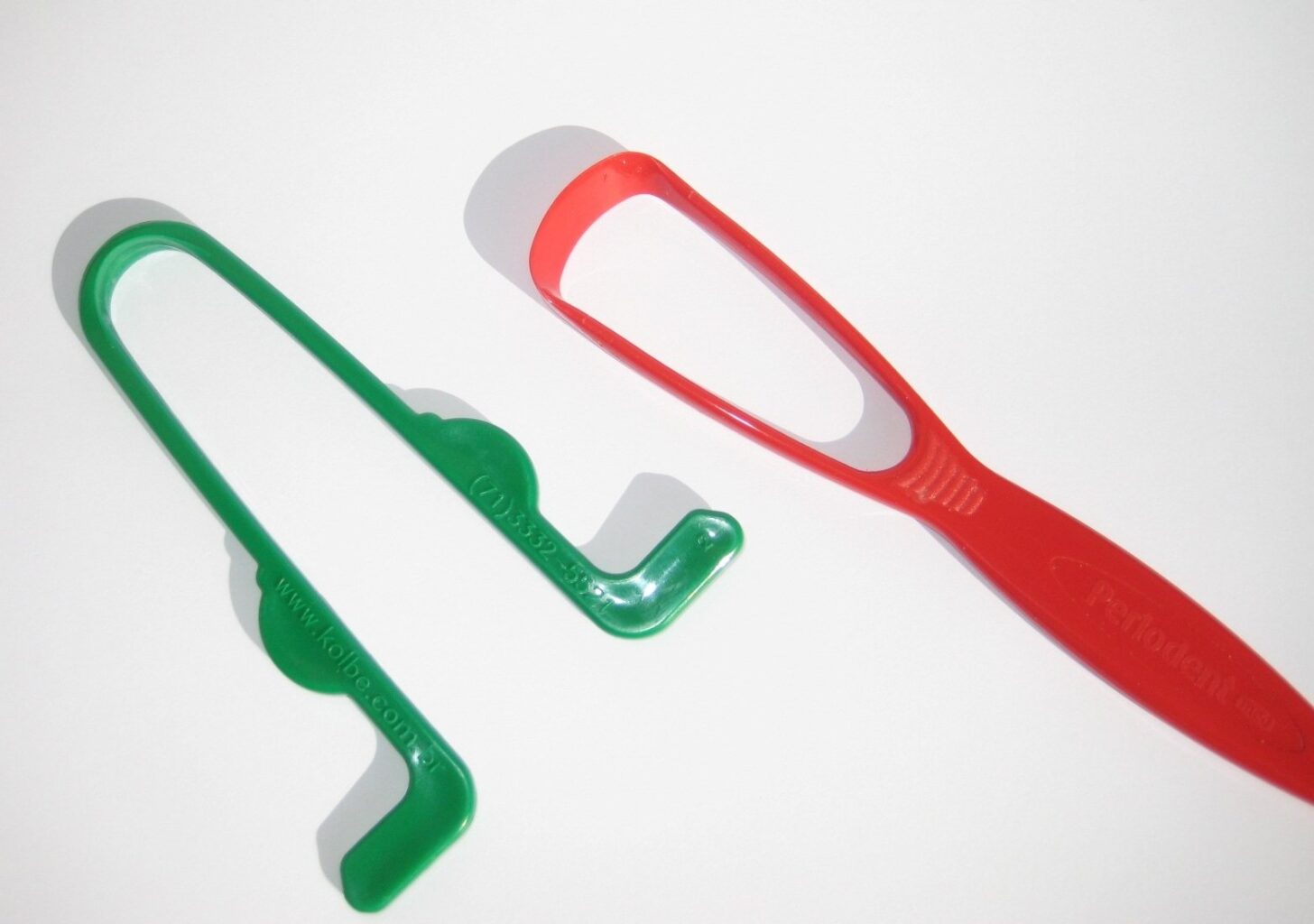
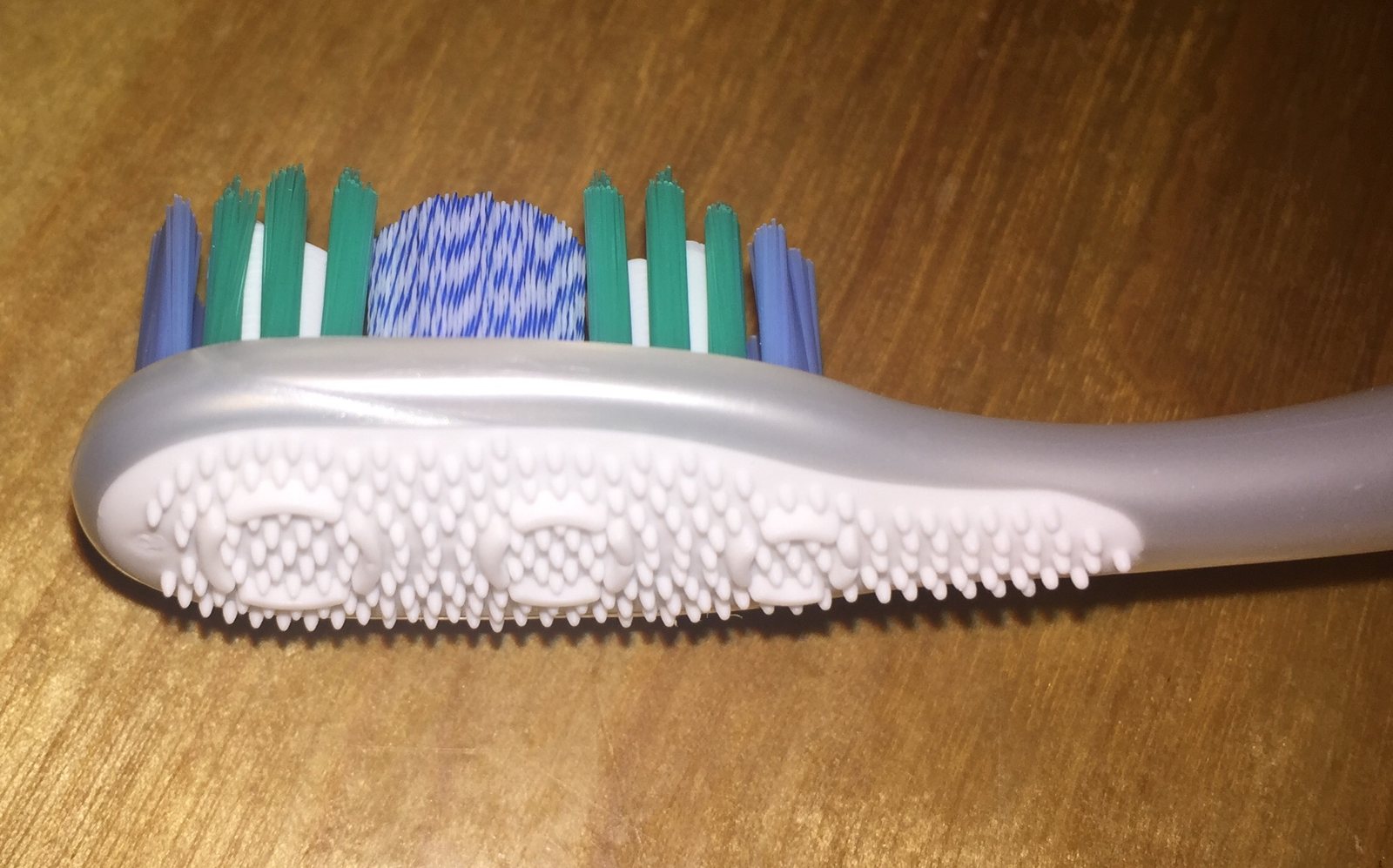
You can brush your tongue with a toothbrush too, but bristles tend to push the coating around rather than lift it. That textured pad on the back of some brush heads does work. A thin scraper still reaches the very back more comfortably.
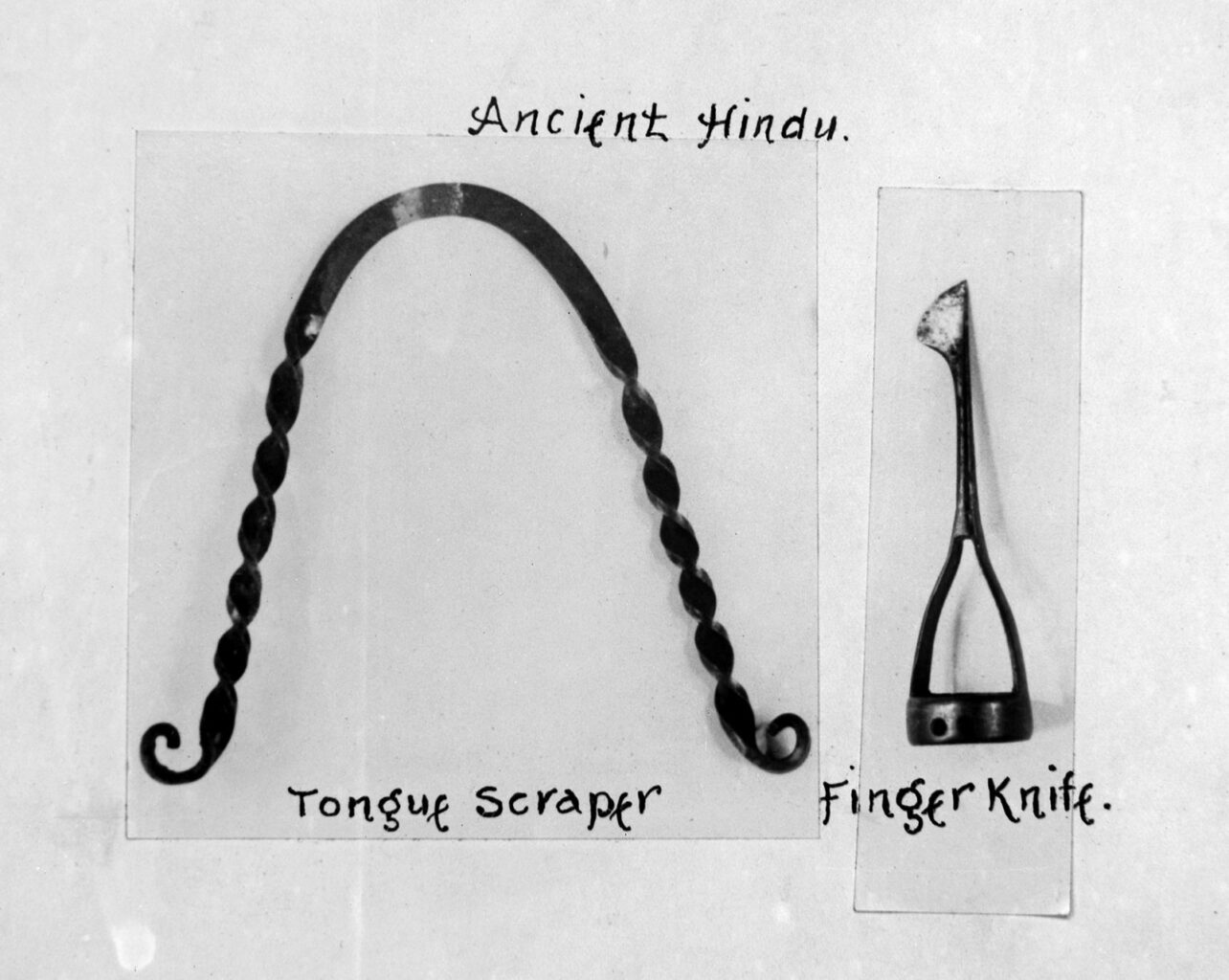
Scraping the tongue is not a new fad, by the way. It has been all over social media in recent years, but metal scrapers have been used in India for centuries.
Why do I have morning breath, and is it normal?
Waking up with bad breath is largely normal. Saliva flow drops sharply during sleep. Saliva is the mouth's natural rinse, so overnight the bacteria work undisturbed. It is much stronger in mouth-breathers, snorers, people who eat late and go straight to bed, and anyone whose nose blocks at night, because the mouth stays open for hours like a dry cave.
If it disappears after breakfast and brushing, there is nothing to worry about. It is purely physiological. If it lasts until noon, or somebody around you notices it later in the day, you need to look for another source.

Does mouth taping help with morning breath?
Taping the lips shut at night, the so-called mouth tape trend, has been talked about a great deal in the last year or two. The logic is easy to follow. If the mouth stays closed it does not dry out, and the morning smell drops. Studies on this are few and small, though. For someone with a blocked nose, who snores, or who might have sleep apnoea, closing the mouth is risky. No joking around there. In my view the right order is to have an ENT doctor check first whether you can breathe comfortably through your nose.
Can bad breath come from the stomach?
Not as often as people think. Normally the lower end of the gullet stays closed, so gas from the stomach does not constantly mix into your breath. Stomach-related odour shows up mostly in people with reflux, together with sour belching and heartburn. Researchers are also looking at a link between the stomach bacterium Helicobacter pylori and breath odour, but the results are not clear yet.
Some of our patients arrive holding a box of reflux tablets. "I've been taking them for months and the smell hasn't gone." On examination we often find a thick coat at the back of the tongue or a bleeding pocket in the gum. What has been hunted in the stomach for months is sitting a few centimetres higher, at the root of the tongue or at the base of the gum. Checking the mouth first, and looking at the stomach only if the mouth comes out clean, is the more sensible order.
Why do garlic, onion and coffee breath not go away with brushing?
After a plate of mantı, little Turkish dumplings drowned in garlicky yoghurt, you can brush three times and the smell stays. Garlic's sulphur compounds are digested, pass into the blood, reach the lungs and leave with the breath. It comes from inside, not from the mouth, and it can last a day or two. There is nothing for it but patience. Lahmacun with raw onion, the thin Turkish flatbread topped with spiced minced meat, is no different. Mayo Clinic also explains that these foods are absorbed into the bloodstream after digestion and affect the breath through the lungs.
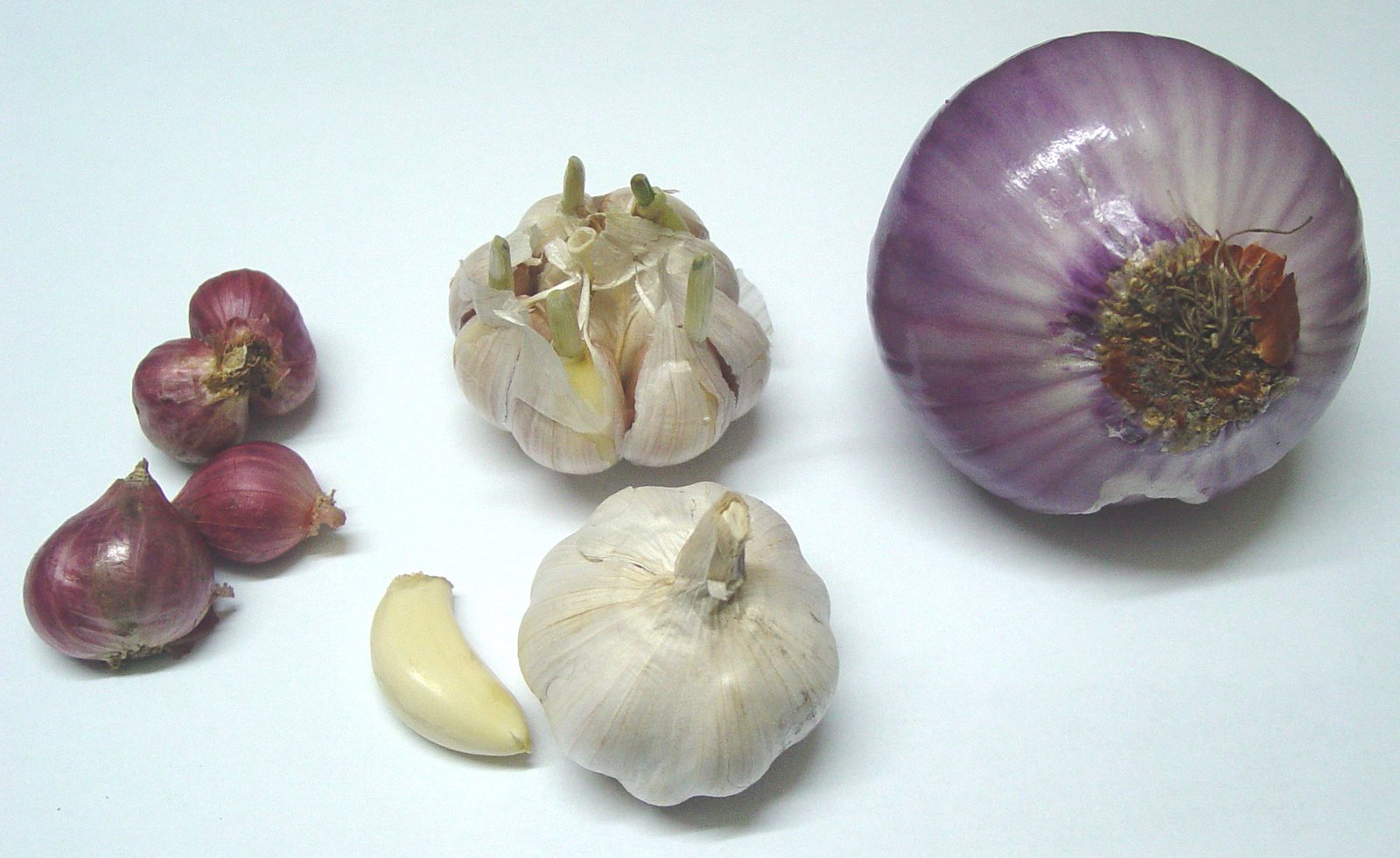
Coffee and cigarettes together dry the mouth out. Picture the routine. A cigarette on an empty stomach on the morning ferry, a cup of coffee drunk standing on the pier, back-to-back meetings until lunch without a single sip of water, and half a simit, the sesame-crusted bread ring sold on every Istanbul corner, somewhere in between. Neither gum nor mouthwash fully covers the smell that comes with that routine. A glass of water next to the coffee is a small habit that works, and in Turkey it arrives with the coffee anyway. Let's not break that tradition.

Why do you get bad breath when fasting?
When you go a long time without eating, saliva falls. Once the body starts burning fat for energy, ketones form and give the breath a faint, acetone-like smell. That is temporary too. People on low-carbohydrate, ketogenic diets notice the same odour. Drinking plenty of water at suhoor, the pre-dawn meal during Ramadan, cleaning your teeth and tongue afterwards, and keeping very salty or spicy food in check at iftar, the meal that breaks the fast, reduce the smell noticeably.
How can you tell if you have bad breath?
The most honest way to test yourself at home is to smell different parts of the mouth separately. Cupping a hand over your mouth is no use, because your nose is already used to that smell.
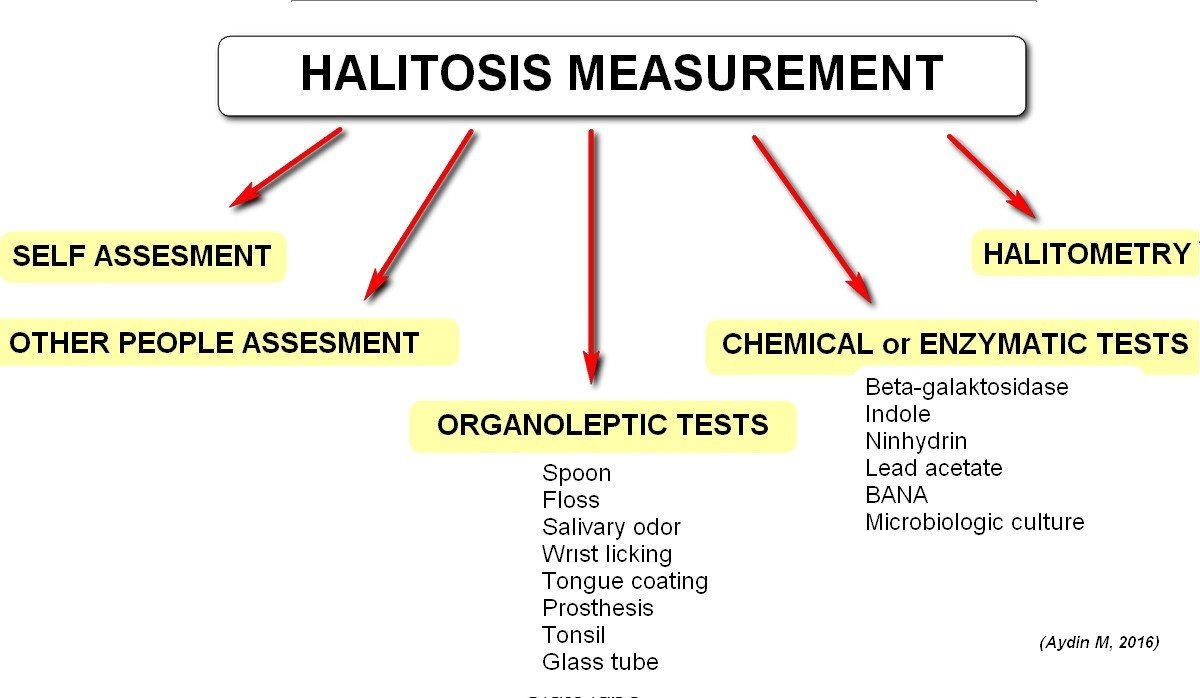
- Spoon test. Put a teaspoon on the very back of your tongue and draw it gently forward, wait a minute and smell it. If the coating on the spoon is yellowish and smelly, the source is most likely the tongue.
- Floss test. Pass floss between your back molars and smell it. A clear odour or blood raises the suspicion of gum disease and build-up between the teeth.
- Wrist test. Lick the inside of your wrist, wait ten seconds and smell it. This reflects the front of the tongue and says little about the back.
- Ask someone you trust. Your partner, your sibling, a close friend. It sounds embarrassing, but it is still the most reliable measurement there is.
None of these tests makes a diagnosis. They only tell you where to look.
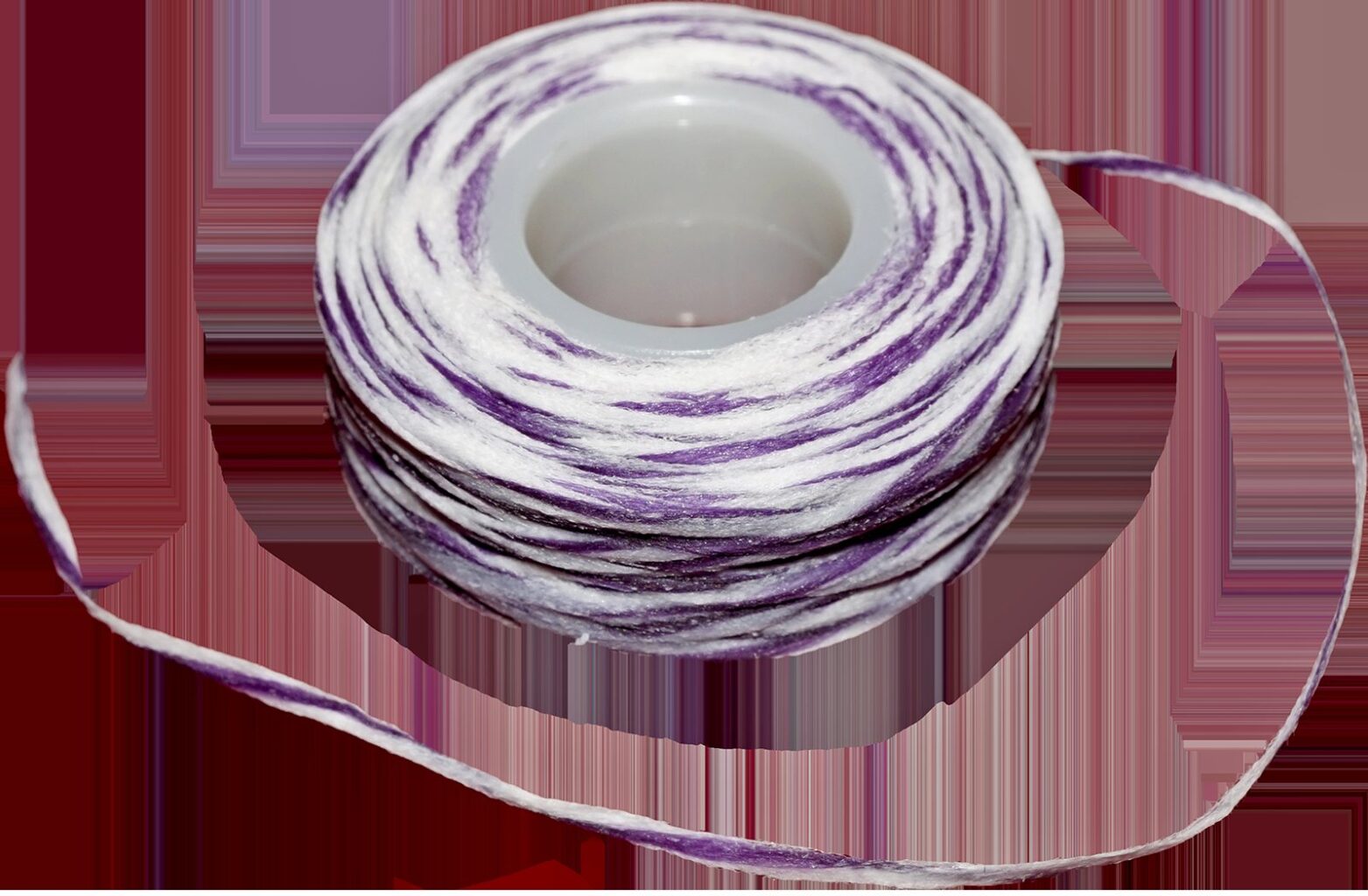
How does a dentist diagnose bad breath?
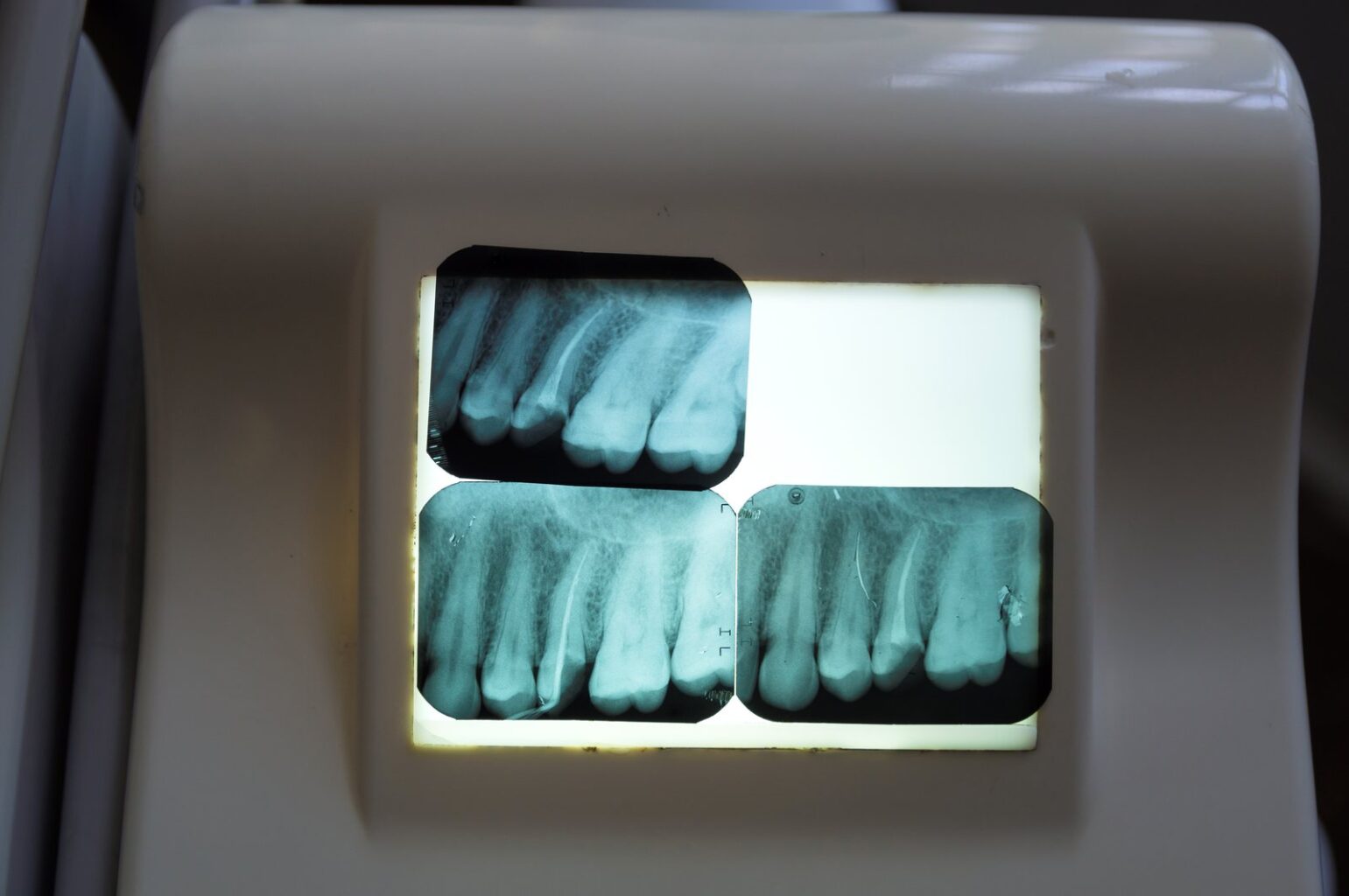
At the appointment we look at the teeth first, then the gums, and the tongue last. Every gum pocket is measured one by one with a thin probe marked in millimetres. We note down bleeding spots, the edges of old fillings, the undersides of bridges and the area around the wisdom teeth. X-rays are needed for decay and leaks under fillings that you cannot see by eye. The eye does not see everything.
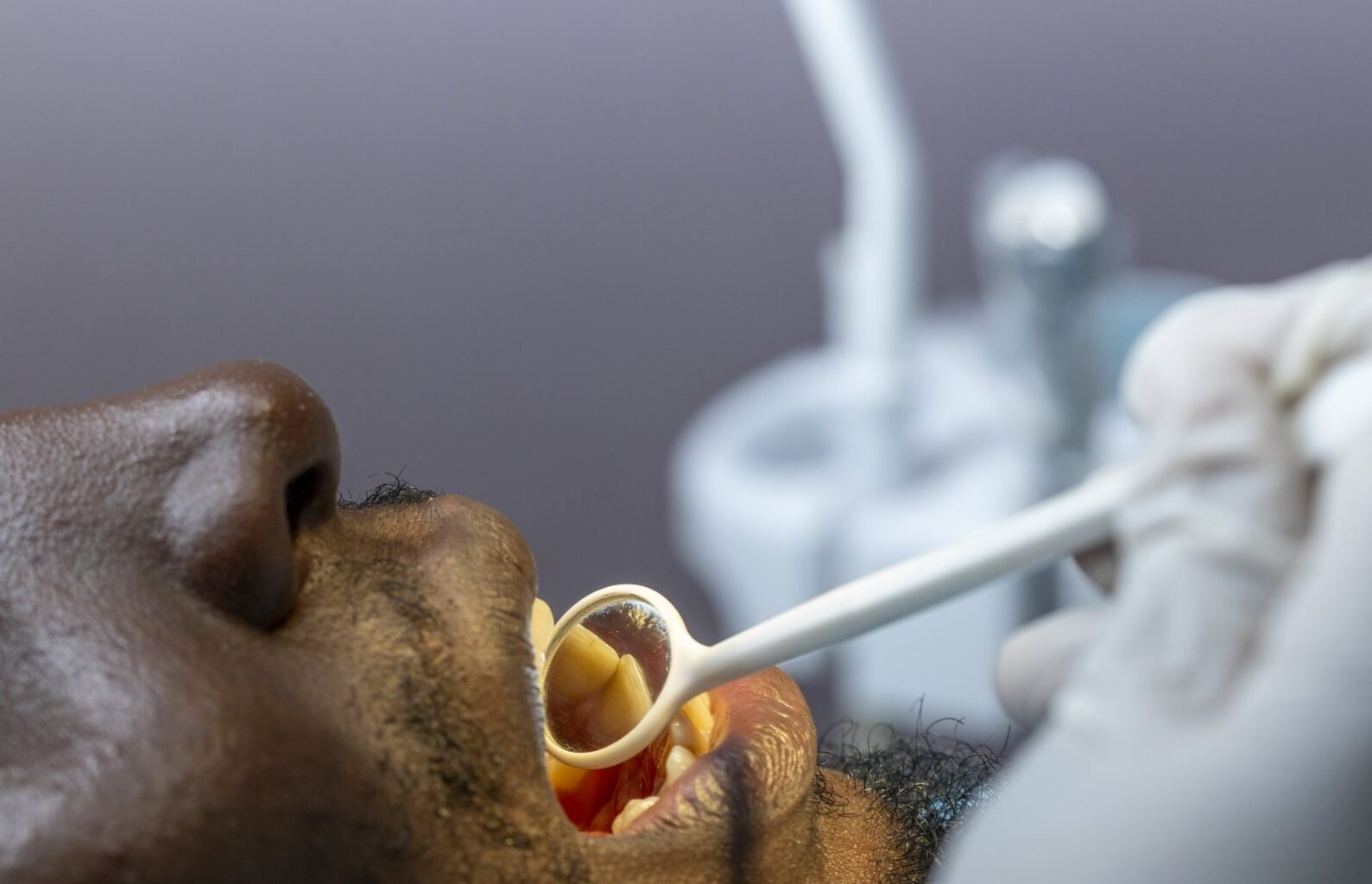
When it comes to the smell itself, things get a little surprising. Brace yourself. We ask the patient to breathe out from a set distance and smell the breath directly. Yes, really, by smelling. In the literature this is called an organoleptic measurement, and it is still regarded as the standard method. Some clinics also use portable devices that measure the sulphur compounds in the breath numerically.
I have one request. If you are coming in for an appointment about breath odour, do not use mouthwash that morning, do not put on perfume, and lay off garlic and onion the day before. One patient once wiped her hands and face so thoroughly with lemon cologne, the Turkish kind that gets poured onto your palms at every holiday visit, that the exam room turned into a festival morning. We could only judge the real smell at the second appointment.
How do you get rid of bad breath?
In most people the smell drops clearly once the source is found and treated. Mints, gum and mouthwash cover the smell for a while and never touch the source. What we do depends on where it comes from.
- If there is tartar, the first step is tartar removal. Tartar is a rough surface, it holds bacteria, and it does not come off with a brush.
- If the pockets are deep, gum treatment is needed. The root surfaces are cleaned and the pockets are measured again a few weeks later.
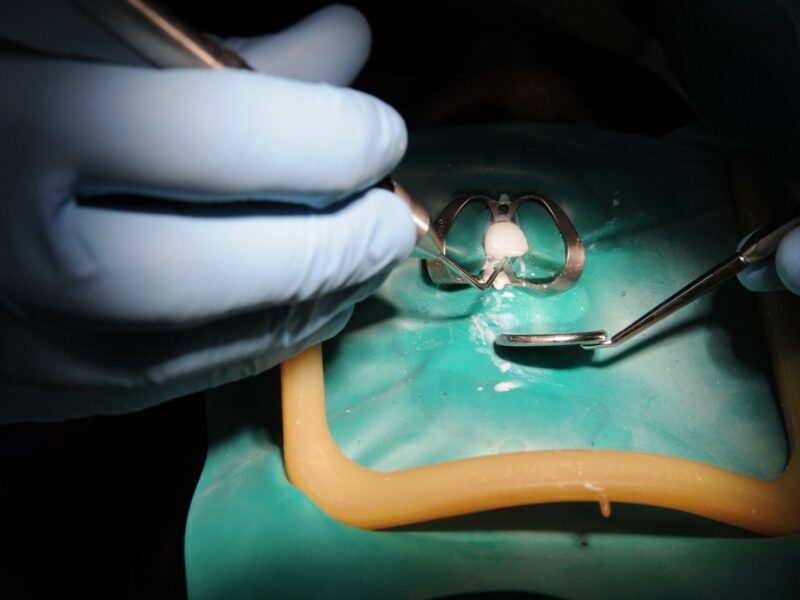
- If there is decay or a broken filling, the filling is replaced. If the decay has reached the nerve, root canal treatment comes into the picture.
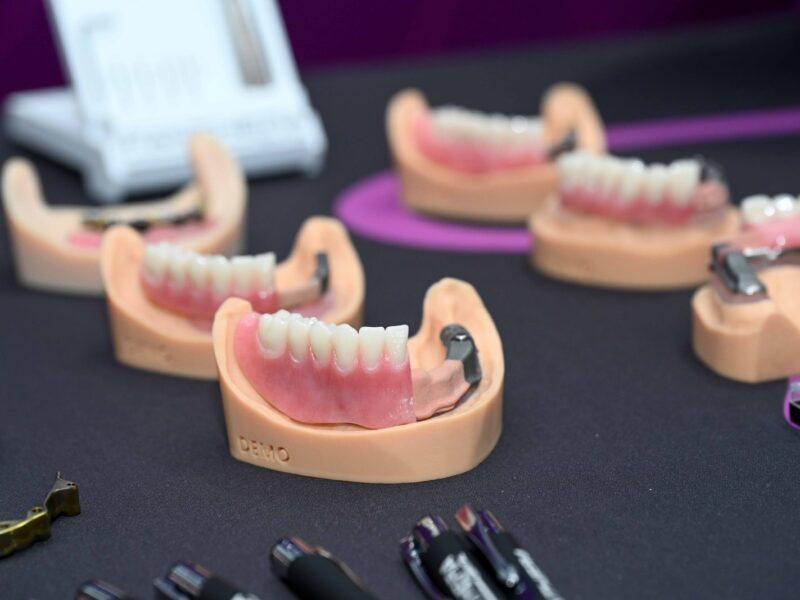
- With overhanging crown edges and old bridges that let food slip underneath, the smell often does not go completely until they are replaced. If you are deciding between a bridge and an implant, our piece on implant or bridge may help.
- Anyone with a removable denture should take it out and brush it every night.
Speaking of dentures. Last month an older lady took her denture, wrapped in a handkerchief, out of her handbag and put it on the desk. "I wear it at night too. I'm afraid that if I take it out I'll leave it somewhere," she said. Fair enough, nobody wants to lose a denture. But a denture left in overnight gets covered, along with the tissue beneath it, in a thick layer of bacteria, and that is where the smell comes from. A pot, a little water, one brush every night. Often it is that pot on the bedside table that cures the fear of losing it.
After treatment the smell may not vanish overnight. Gum healing takes a few weeks, and the relief that treatment brings does not last unless the care at home settles into a routine. That is why we book the first check-up 4-6 weeks after treatment.
What helps bad breath at home?
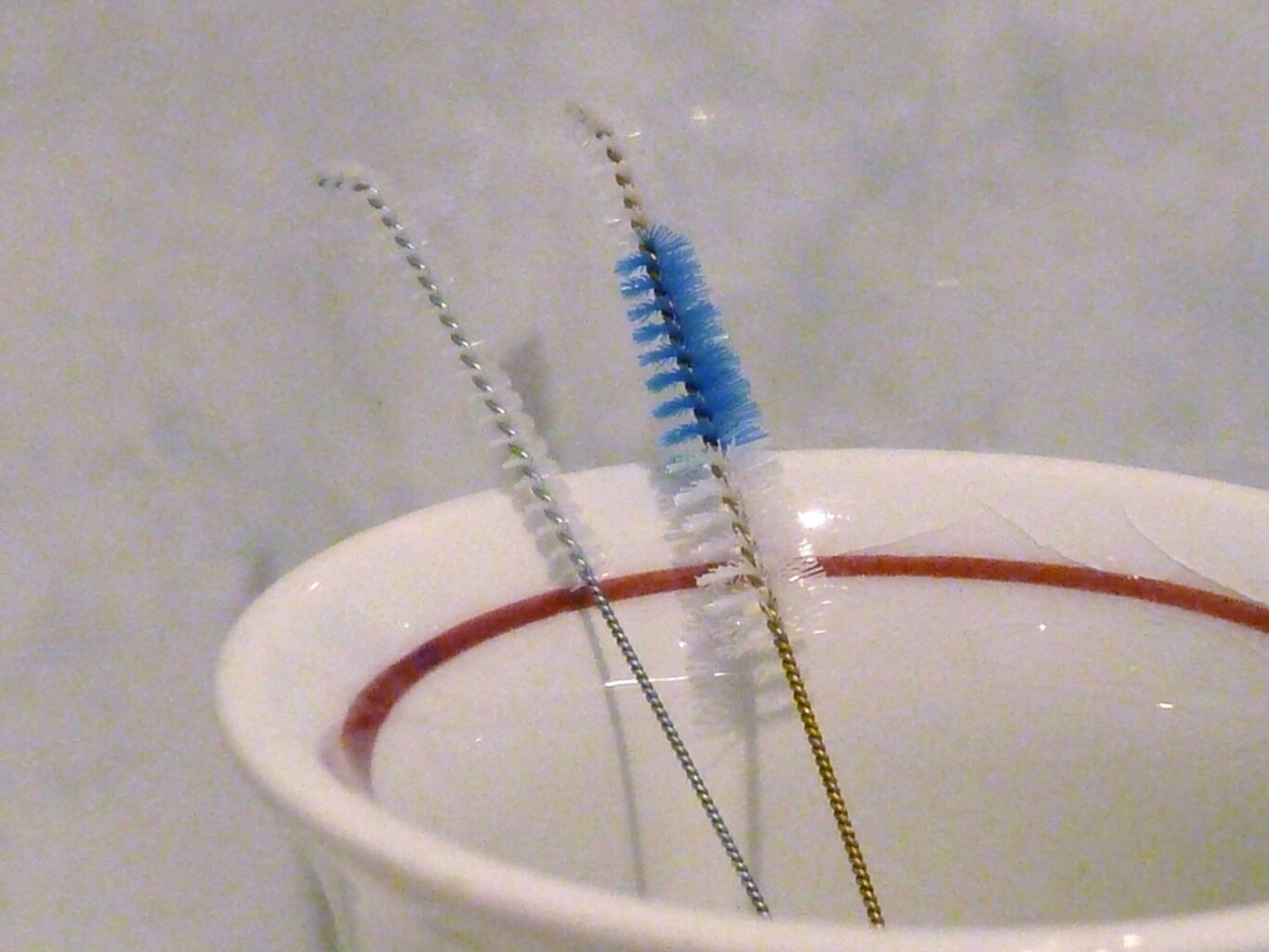
The single most effective thing you can do at home is never skip the brushing before bed. Daytime brushing matters too, but the night brushing takes away the food the bacteria would otherwise find while you sleep. Two minutes with the brush, then floss or an interdental brush, and finally the tongue. The rest is detail.
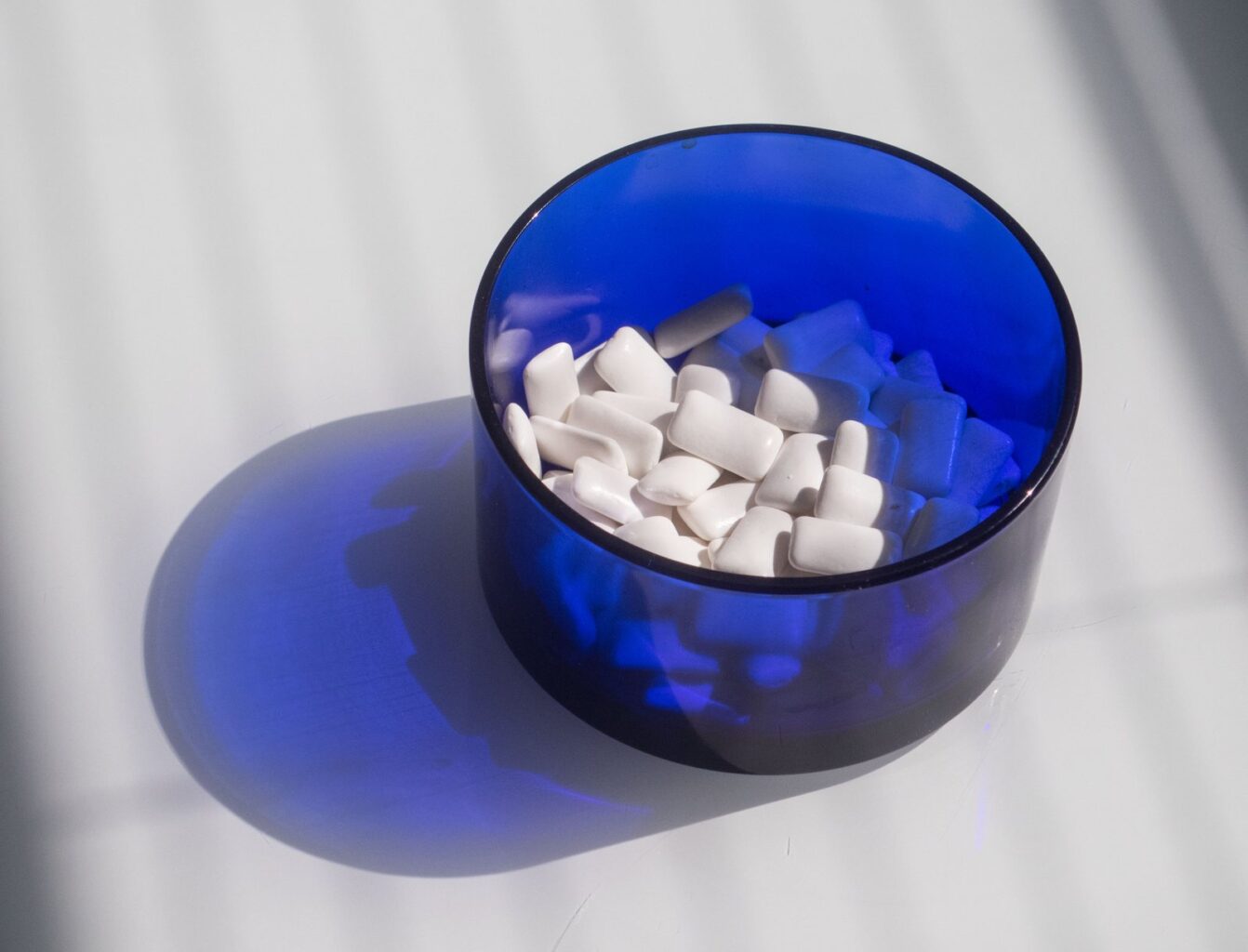
Sipping water through the day helps with a dry mouth. Sugar-free gum with xylitol boosts saliva and gives short-term relief. Two packs of gum a day, on the other hand, tells us something, namely that the source is still where it was.
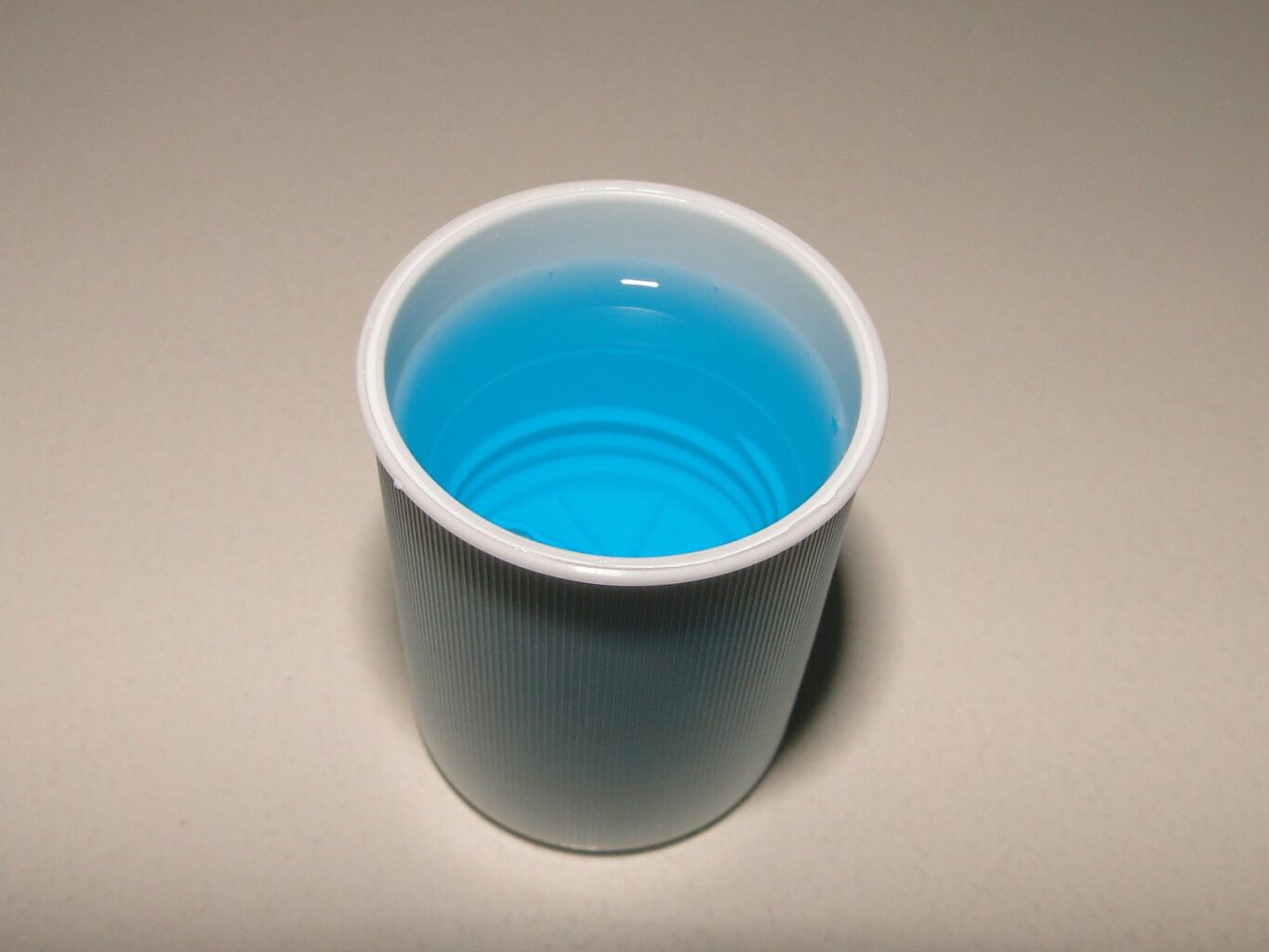
To be frank about mouthwash, most products hold the smell down for an hour or two. They differ only in how long. Alcohol-containing ones can dry the mouth and work in reverse after a while. Chlorhexidine mouthwashes help for the short period a dentist recommends during gum treatment, and with prolonged use they can stain the teeth brown and change the taste. Alcohol-free mouthwashes containing zinc or cetylpyridinium chloride bind sulphur compounds and may work a bit longer.
Parsley, green apple, clove, green tea. All of them mask the smell for a while and none does any harm. Oil pulling, the social media favourite where you swish a spoonful of coconut oil around your mouth for minutes, belongs in the same group. There is no strong evidence that it can replace the toothbrush. Harmless but not enough. The recipe of mixing baking soda with lemon and rubbing it on the teeth I openly oppose. Acid and abrasive together wear down enamel.
Which kinds of bad breath can signal an illness?
Sometimes the character of the smell gives a clue. If it continues after the mouth and gums have been treated, other sources need thinking about.
- A smell of rotting fruit or acetone, especially together with extreme thirst and frequent urination, can be a sign of uncontrolled blood sugar, and you should see a doctor without waiting.
- A smell reminiscent of urine or ammonia may be related to kidney function.
- A sweetish, musty smell is described in liver disease.
- Small white, very foul-smelling pieces that come up when you cough, along with a feeling of something stuck in the throat, point to tonsil stones.
- A smell that comes with a blocked nose, mucus down the throat and a feeling of fullness in the face may be related to sinusitis.
The NHS likewise advises seeing a dentist if bad breath has not cleared after a few weeks of regular care at home. If bleeding gums, swelling or a loose tooth go with it, there is no reason to wait.
What causes bad breath in children?
In children the most common causes are mouth breathing and the coating on the tongue. Kids with enlarged adenoids sleep with the mouth open, and a noticeable morning smell follows. Decayed baby teeth are another important source.
Parents often miss one situation. If a child has a foul, coloured discharge from one nostril and the breath smells as well, a small foreign object may have gone up the nose, a bead or a chickpea for example. Many parents take it for a cold that will not go away. A nose examination is a must. At children's dentistry check-ups, teaching tongue cleaning as a game helps the habit stick.
Which doctor should you see for bad breath?
Start with your dentist. In most cases the source is in the mouth, so an examination, gum measurements and, if necessary, X-rays clear up most of the picture. If the mouth comes out clean and the smell continues, an ENT doctor looks at the sinuses and tonsils, a gastroenterologist at suspected reflux, and your GP at the general picture.
That Tuesday morning we put a tongue scraper next to the packet of gum. There was a thick coat at the back of his tongue and two bleeding pockets between the lower molars. As I booked him in for tartar removal, he looked up. "Should I give up the gum?" He does not have to, I told him, but the gum will not be carrying the load on its own any more.
Frequently asked questions
Can bad breath be cured completely?
If the source is in the mouth and that source is treated, the smell drops clearly in most people. Once tartar, gum pockets and the coating on the tongue have been cleaned, the smell can still return within a few months if home care is not kept up. What decides how long the result lasts is the daily routine after treatment.
Why does my breath smell even though I brush my teeth?
A toothbrush cleans the front and back surfaces of the teeth. It barely reaches between the teeth, the depths of the gum pockets or the back of the tongue, and those are exactly where the smell most often comes from. Adding floss or an interdental brush plus a tongue scraper often makes the difference.
Does bad breath come from the stomach?
Most of the time it does not, because the bulk of the odour has a source in the mouth. Stomach-related smell is seen mostly with reflux, alongside sour belching and heartburn. A dental examination first, and a stomach assessment if the mouth is clean, is the sounder order.
Can tonsil stones cause bad breath?
Yes. Food debris and bacteria collecting in the pits of the tonsils harden into small white or yellow stones with a very foul smell. A feeling of something stuck in the throat and white specks that come up when you cough are the typical signs, and an ENT doctor makes the assessment.
Does tartar removal get rid of bad breath?
If the source of the smell is tartar and the gum inflammation that goes with it, the odour drops clearly after cleaning. When the gum pockets are deep, cleaning alone may not be enough and gum treatment is needed. The coating on the tongue also has to be cleaned separately.
Does mouthwash get rid of bad breath?
Most mouthwashes mask the smell for an hour or two without removing the source. Alcohol-containing ones can dry the mouth and make the smell worse. Alcohol-free mouthwashes with zinc or cetylpyridinium chloride may last a little longer, while chlorhexidine ones should only be used for the short period a dentist recommends.
Does chewing gum help with bad breath?
Sugar-free gum, ideally with xylitol, boosts saliva and gives short-term relief when the smell comes from a dry mouth. It does not treat the source. If you feel the need to chew gum all day, the cause of the smell should be investigated.
How do you reduce bad breath when fasting?
Drinking plenty of water at suhoor, cleaning your teeth and tongue after suhoor and keeping very salty, spicy food in check at iftar all reduce the smell. A faint odour is normal during fasting because saliva drops and ketones form. If the smell continues after iftar, a source in the mouth should be considered.
Which doctor should you see for bad breath?
The first doctor to see is a dentist, because in most cases the source is in the mouth. If the tooth and gum examination finds nothing, you are referred to an ENT specialist for the sinuses and tonsils, and to a gastroenterologist if reflux is suspected.
How can I test my own breath at home?
You can scrape the back of your tongue lightly with a spoon and smell it a minute later, or smell floss after passing it between your back teeth. Cupping a hand over your mouth is not reliable, because the nose gets used to its own smell. Asking someone close to you is still the most practical method.
If bad breath won't leave you alone, let's find the source with an examination. Write to us with your questions and we will arrange a time that suits you at our Haliç or Pendik clinic in Istanbul. Contact us